How to Choose the Best Floating Aerator Pump for Your Needs?
Choosing the right Floating Aerator Pump can significantly impact water quality and aquatic life. According to Dr. Emily Parker, a leading expert in water management, "The right aerator can transform a stagnant pond into a thriving ecosystem." Her insight emphasizes the importance of making informed choices in this area.
When evaluating Floating Aerator Pumps, consider the specific conditions of your water body. Factors like size, depth, and vegetation are critical. Each pump has unique features designed for various environments. The right choice depends on specific needs, making thorough research essential.
Always remember that not all pumps are equal. Some may underperform in certain conditions. It’s crucial to prioritize reliability and efficiency. Ultimately, selecting a Floating Aerator Pump that meets both functional and ecological needs can enhance water quality and promote biodiversity.
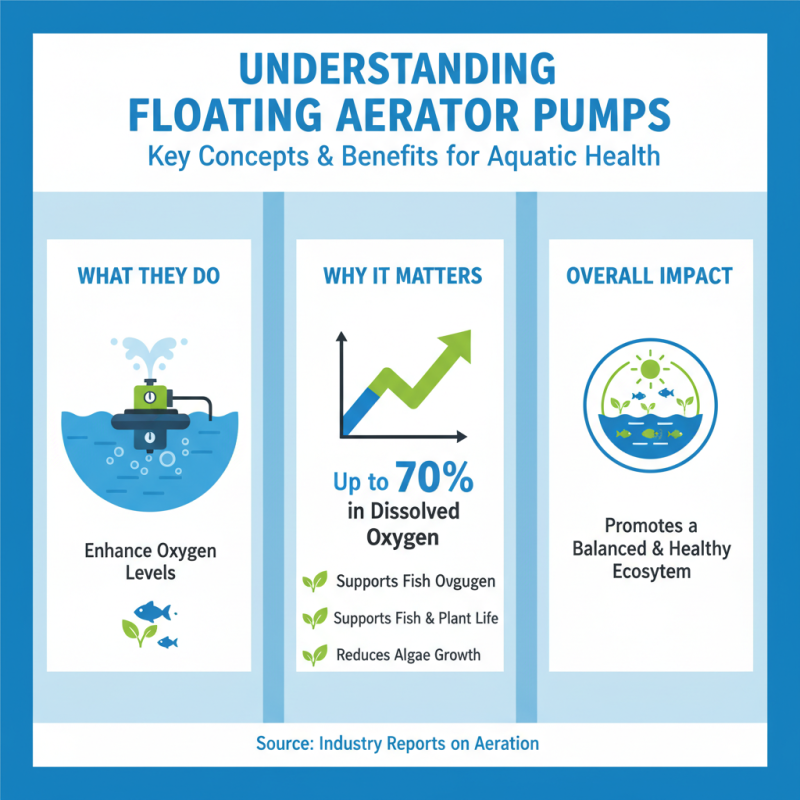
Understanding Floating Aerator Pumps: Key Concepts and Benefits
Floating aerator pumps are essential for maintaining healthy aquatic environments. They enhance oxygen levels in water bodies, supporting fish and plant life. According to industry reports, proper aeration can increase dissolved oxygen levels by up to 70%. This improvement is vital for reducing algae growth and promoting a balanced ecosystem.
Choosing the right floating aerator involves understanding your specific needs. Factors include the size of the water body and the intended use, whether for recreational or agricultural purposes. Data indicates that a well-selected aerator can reduce nutrient buildup significantly, sometimes by as much as 50% in certain conditions. However, one must also consider maintenance and operational costs, which can vary widely based on the model.
Even with the best data and information, misjudgments can occur. Some users might underestimate their water body's needs, selecting an underpowered pump. This can lead to ineffective aeration and unexpected algae blooms. Lack of regular monitoring can also result in overlooking changes that impact aeration efficiency. Balancing cost with the right specifications is crucial for long-term success. Understanding these nuances will help in making an informed choice.
Assessing Your Waterbody: Size, Depth, and Requirements
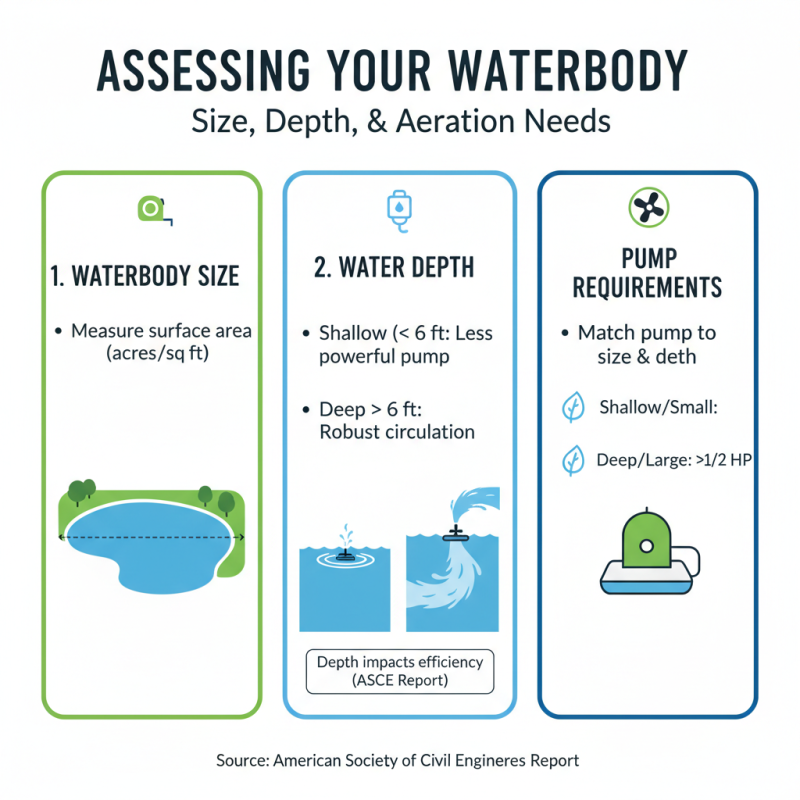
When selecting a floating aerator pump, evaluating your waterbody is crucial. Start by measuring the size of your pond or lake. According to a report by the American Society of Civil Engineers, water depth directly impacts aeration efficiency. Shallow bodies may require less powerful pumps, but deeper ones often need more robust systems to circulate water effectively.
Consider the specific requirements of your waterbody. For instance, fish populations and plant growth can influence oxygen levels. Research indicates that ponds with high nutrient loads demand more aeration. A study published in the Journal of Environmental Science found that optimal aeration can enhance water quality, benefiting aquatic life. The pump’s capacity should align with these factors to ensure effectiveness.
Take into account the challenges of installation and maintenance. Not all pumps are easy to set up. Some may need frequent attention. If a pump fails to meet your requirements, the consequences can be significant. Water quality may decline, harming fish and plants. Ultimately, understanding these dimensions will guide you to a more suitable floating aerator pump.
Evaluating Pump Features: Power, Flow Rate, and Energy Efficiency
When choosing a floating aerator pump, it's essential to assess its key features. Power is crucial. High-powered pumps may handle larger bodies of water effectively. Generally, a pump's power rating is measured in watts. A typical floating aerator might range from 1,000 to 3,000 watts. However, higher power doesn’t always mean better efficiency. Some pumps may deliver better aeration at lower wattage. Energy consumption can significantly impact your operational costs.
Flow rate is another vital feature. It indicates how much water is moved in a specific time frame, usually measured in gallons per minute (GPM). An ideal floating aerator usually has a flow rate of 2,000 to 7,500 GPM, depending on the size of your pond. However, too high a flow rate may disrupt aquatic life. Understanding the balance between flow rate and ecological needs is essential.
Energy efficiency ratings should also guide your decision. A highly efficient pump can operate on lower power while maintaining performance. According to industry reports, well-designed aerators can save up to 30% in energy consumption compared to standard models. However, available data may vary based on the specific environment. Buyers often overlook these details, leading to higher costs and less effective aeration in the long term.
Comparing Types of Floating Aerator Pumps: Pros and Cons
When selecting a floating aerator pump, understanding various types is essential. Each type has its advantages and disadvantages. Surface aerators are effective for large water bodies. They promote oxygen transfer at the surface, enhancing water quality. However, they can be noisy and may not work well in murky water.
Submersible aerators are quieter and can reach deeper water layers. They efficiently mix water, which helps distribute oxygen throughout the body of water. Their drawback is that they might require more maintenance due to underwater components. Additionally, energy consumption can be higher with submersible models, impacting long-term costs.
Hybrid aerators combine surface and submersible features. They offer versatility but can be complex to install. Users may find the setup challenging without expert guidance. Think carefully about your specific needs. Reflect on your water body’s size, depth, and existing conditions before deciding.
How to Choose the Best Floating Aerator Pump for Your Needs?
| Type of Aerator Pump |
Pros |
Cons |
Best Use Case |
| Surface Aerators |
Effective in oxygen transfer, easy to install |
Can cause bubbling, less efficient in deep water |
Shallow ponds and lakes |
| Subsurface Aerators |
Great for deeper water, minimizes surface disturbance |
Higher installation complexity, maintenance can be tricky |
Deep lakes and large water bodies |
| Floating Fountain Aerators |
Aesthetic appeal, good aeration during operation |
Seasonal use, may not provide year-round aeration |
Decorative ponds and lakes |
| Solar-Powered Aerators |
Eco-friendly, reduces electricity costs |
Dependent on sunlight, may not work efficiently in cloudy weather |
Remote locations without electrical access |
Budgeting for Purchase and Maintenance: Costs and Considerations
When budgeting for a floating aerator pump, several factors come into play. The initial cost is crucial. These pumps can range in price significantly, depending on size and features. Additionally, consider installation costs. Hiring professionals may add to the budget but can ensure proper setup. A DIY approach may save money but requires expertise and time.
Maintenance is another key aspect that can affect long-term costs. Regular checks are necessary to ensure smooth operation. Replacing worn parts can add to expenses. Sometimes, people underestimate these ongoing costs. This can lead to unexpected financial burdens later. Calculate potential maintenance costs before purchasing to avoid surprises.
Choosing the right pump also means considering its efficiency. Look for energy consumption to understand monthly utility expenses. Some models might save energy but require a higher upfront cost. Assessing these details is essential for making an informed choice. Every budget is different, and adapting your choices to meet your needs is vital.
Cost Analysis of Floating Aerator Pumps