Leave Your Message

How to Choose a Rotary Rake Grille Decontamination Machine?

Choosing a Rotary Rake Grille Decontamination Machine requires more than comparing catalog prices. In a busy wastewater plant, the right unit protects pumps, screens, and downstream treatment equipment from rags, plastics, wood, and tangled debris. It must also match the channel width, water depth, flow rate, bar spacing, and expected solids load. Small errors can create large maintenance problems.

Experienced operators usually begin with site conditions, not attractive specifications. Measure the channel carefully. Check peak flow, seasonal variation, debris type, and available lifting access. A machine that performs well during a clean demonstration may struggle when wet wipes wrap around the rake. That detail matters. Review rake strength, corrosion resistance, cleaning cycles, motor protection, emergency controls, and spare-parts availability. Ask suppliers for verified performance data, installation references, and service records. Independent testing and documented factory procedures can strengthen confidence, but they do not replace a site assessment.

The best Rotary Rake Grille Decontamination Machine should remove solids reliably without causing excessive head loss or frequent stoppages. Energy use, noise, wash-water demand, and operator safety also deserve attention. A lower purchase price may hide difficult access, expensive wear parts, or weak technical support. Measure twice. Compare lifecycle cost, not only the quotation. No selection is perfect, and assumptions can fail after installation. Leave room for review. The final decision should reflect operating evidence, clear specifications, and the plant’s future capacity.

How to Choose a Rotary Rake Grille Decontamination Machine?

What Is a Rotary Rake Grille Decontamination Machine?

A rotary rake grille decontamination machine is an inlet screening system for wastewater treatment plants. Its rotating rakes capture plastics, wipes, stones, and fibrous debris before they damage pumps or biological equipment. The rake lifts collected material from the channel. Washing, compaction, and controlled decontamination can then reduce retained liquid and handling risks. The exact process depends on the machine configuration.

The need is substantial. The U.S. Environmental Protection Agency’s 2022 Clean Watersheds Needs Survey estimated 630.1 billion dollars in wastewater infrastructure needs over 20 years. The United Nations World Water Development Report 2024 also reported that 3.5 billion people lacked safely managed sanitation in 2022. These figures support careful inlet protection, not careless equipment selection. A suitable machine should match peak flow, channel width, screen spacing, debris type, and allowable headloss. Stainless construction helps in corrosive environments. Enclosed discharge reduces splashing and odors.

Do not trust capacity alone. A machine rated for average flow may struggle during storms. Check rake torque, cleaning-water demand, access doors, emergency stops, and spare-part availability. WEF guidance in Manual of Practice No. 8 emphasizes maintainability and process reliability in wastewater facilities. Field experience still matters. A compact design may look efficient, yet become difficult to service beside a narrow channel. I would also question any claim of complete decontamination without verified contact time, chemical control, and independent testing. Assumptions fail quickly when wipes, grease, and grit arrive together.

How Does a Rotary Rake Grille Decontamination Machine Work?

How to Choose a Rotary Rake Grille Decontamination Machine?

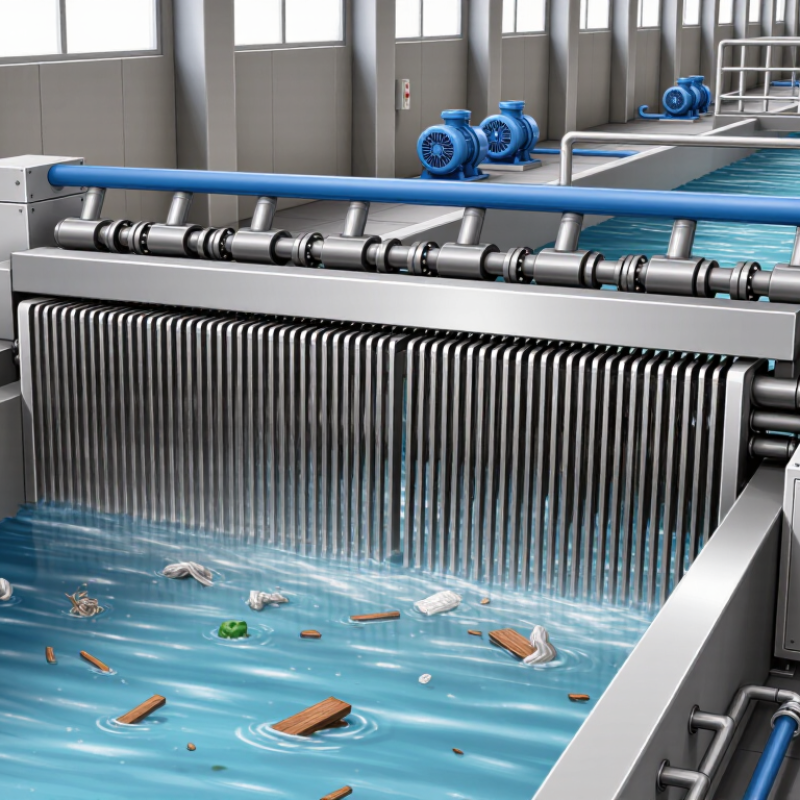
A rotary rake grille decontamination machine removes solids from incoming wastewater before pumps and treatment units. Wastewater flows through a metal grille with fixed openings. Floating debris becomes trapped against the bars. A rotating rake then moves upward along the grille surface. Its teeth collect rags, leaves, plastics, and other coarse material. At the top, a scraper or washing system releases the captured waste into a discharge chute.

The machine’s operating cycle depends on water level, flow speed, and debris volume. Sensors can start the rake when the upstream level rises. This reduces unnecessary movement and energy use. Correct grille spacing matters. Narrow openings capture more material, but they may clog faster. Wider openings allow better flow, yet smaller debris may pass through. Operators should check corrosion resistance, motor protection, access for cleaning, and the reliability of the control system. In real installations, even a strong machine can perform poorly when the rake speed is mismatched with the site’s flow.

Tips: Measure peak flow, not only average flow. Inspect the discharge area during heavy debris periods. Leave enough space for safe maintenance. Ask for service records and replacement-part availability. A simple design is often easier to maintain, though it may offer fewer automatic features. Testing local debris conditions before purchase can prevent an expensive mistake.

Which Grille and Site Conditions Should You Assess?

How to Choose a Rotary Rake Grille Decontamination Machine?

Grille and site conditions determine the machine more than rated capacity. Measure channel width, water depth, peak flow, bar spacing, and upstream level changes. Fine screens capture smaller solids but increase headloss and cleaning frequency. Coarse grilles tolerate heavy debris, including branches and wet wipes, but allow more material downstream. The choice is rarely obvious.

The U.S. Environmental Protection Agency’s 2023 Clean Watersheds Needs Survey estimates 630.1 billion dollars in wastewater infrastructure needs over twenty years. That scale makes maintainability important, not merely purchase price. Inspect the rake path, discharge height, corrosion exposure, and available lifting space. Check whether washwater can return safely to the process. A compact site may need a shorter frame or remote control.

Flow variation matters. A rotary rake must remain stable during storms, power interruptions, and sudden debris loads. Record normal and peak conditions for several days if possible. The U.S. EPA’s 2024 National Pretreatment Program guidance emphasizes reliable solids control and operational monitoring. Use those principles when reviewing alarms, overload protection, and cleaning cycles. Safety access is easy to underestimate.

Leave room for human judgment. Actual debris may differ from design samples. A trial inspection, or even a temporary screen basket, can reveal uncomfortable assumptions. The perfect specification rarely exists. Recheck measurements before ordering.

How to Compare Capacity, Materials, and Cleaning Performance?

How to Choose a Rotary Rake Grille Decontamination Machine?

Capacity should match real wastewater conditions, not only the average flow rate. Check peak flow, solids loading, channel width, and available installation depth. A machine sized too closely to normal flow may overflow during storms or sudden discharge. Allow practical reserve capacity. It matters.

During site assessments, I compare the rake’s lifting rate with the expected screenings volume. A fast rake is not always better if the washing system cannot handle the collected material. Examine the discharge height, conveyor interface, and cleaning cycle. These details affect daily operation more than brochure figures. One mistake I have seen is selecting capacity from pump data alone. Influent solids can change significantly.

Material selection should reflect corrosion, abrasion, and cleaning chemicals. Stainless steel offers reliable protection, while higher-grade alloys may suit saline or aggressive wastewater. Inspect weld quality, shaft protection, bearings, and replaceable wear parts. Thin components may reduce initial cost but increase maintenance. That trade-off deserves careful review.

Cleaning performance depends on spray pressure, brush design, rake speed, and the type of debris. Fibrous wipes, plastic strips, and grease behave differently. Ask for test results using similar screenings, not clean water alone. Check whether the machine removes material consistently without leaving residue on the bars. A slightly slower cycle may deliver cleaner results and reduce blockages. Real plants are rarely perfect, so confirm access for manual inspection and accept that some adjustment may be needed after commissioning.

What Safety, Maintenance, and Installation Factors Matter?

How to Choose a Rotary Rake Grille Decontamination Machine?

Safety begins with the machine’s working environment. Choose a unit with fixed guards, an accessible emergency stop, and clear inspection points. Operators should isolate electrical and mechanical energy before removing trapped debris. Never rely on the control panel alone. Wet floors increase slip risks, so provide drainage, lighting, and non-slip walkways around the equipment. The discharge area also needs protection from falling screenings and unexpected spray.

Installation quality strongly affects performance. Confirm the channel width, water depth, flow direction, and available lifting space before ordering. The support frame must sit level on a sound foundation. Even slight misalignment can increase chain wear and vibration. Leave enough room for removing the rake, motor, and protective covers. Many projects overlook this detail. Access matters.

Maintenance should be practical, not merely listed in a manual. Inspect rake teeth, chains, bearings, fasteners, and spray nozzles at scheduled intervals. Remove fibrous material before it hardens around moving parts. Check corrosion near welds and submerged connections. Keep a simple log of noise, vibration, cleaning frequency, and replaced components. A small change can reveal a larger fault. However, maintenance plans should remain flexible because debris loads vary by season and site. An overly rigid schedule may waste labor, while a neglected inspection can stop the entire screening process.

How to Choose a Rotary Rake Grille Decontamination Machine? - What Safety, Maintenance, and Installation Factors Matter?

A practical comparison guide for selecting a rotary rake grille decontamination machine for wastewater screening applications

Decision Dimension What to Check Typical Requirement or Benchmark Why It Matters Verification Method
Screen Opening Compatibility Compatibility between the machine, rake teeth, and the existing grille or bar screen. The rake profile and tooth spacing should match the screen opening and bar geometry without excessive clearance. Incorrect matching can leave screenings behind, increase jamming, or damage the screen bars. Confirm bar spacing, bar thickness, rake tooth dimensions, and the manufacturer’s interface drawing.
Hydraulic Capacity Maximum design flow, peak flow, water level difference, and allowable upstream head loss. Select capacity for the peak design flow, not only the average daily flow; verify the screen remains submerged and hydraulically stable. Undersizing may cause upstream flooding, while excessive head loss can reduce treatment performance. Review hydraulic calculations, peak-flow records, channel dimensions, and head-loss curves.
Screening Load Expected quantity, size, moisture content, and abrasiveness of captured solids. The discharge and conveying system should handle the maximum expected screenings volume without overflow or blockage. High solids loading affects rake-cycle frequency, motor sizing, cleaning intervals, and storage capacity. Use historical screenings data where available and include a design allowance for seasonal peaks.
Rake Operating Speed Rake travel speed, cycle frequency, and control response to changing water levels. The cycle rate should be adjustable so the rake can respond to variable debris loading and differential water levels. Adjustable operation helps limit unnecessary wear, power consumption, and repeated overload trips. Check the operating range, variable-speed control, automatic level sensor, and manual override.
Machine Safety Guarding Protection around chains, sprockets, shafts, belts, pinch points, and moving rake components. All accessible moving parts should have fixed or interlocked guards, with no exposed entanglement or crushing points during normal operation. Guarding reduces the risk of entanglement, crushing, shearing, and accidental contact during operation. Perform a documented machinery-risk assessment and inspect guards during factory and site acceptance tests.
Emergency Stop System Emergency-stop buttons, pull cords, reset logic, and stop response. Emergency stops should be readily accessible from operating and maintenance positions and require a deliberate reset before restart. Fast isolation is essential if a person becomes exposed to moving equipment or if a blockage develops. Test every emergency-stop device and verify that restarting cannot occur automatically after reset.
Lockout and Isolation Electrical disconnects, mechanical isolation points, and procedures for clearing blockages. Provide a lockable main disconnect and a documented lockout/tagout procedure before cleaning, inspection, or repair. Stored electrical, hydraulic, and mechanical energy can cause unexpected movement during maintenance. Check isolation points, warning labels, access clearance, and site-specific lockout procedures.
Electrical Protection Motor rating, supply voltage, enclosure protection, overload protection, and corrosion resistance. The control panel and field equipment should suit the site voltage and environmental conditions; outdoor wastewater areas commonly require weather-resistant enclosures. Moisture, corrosive gases, and conductive deposits can cause insulation failure, corrosion, and electrical faults. Confirm voltage, frequency, motor current, enclosure rating, grounding, overload relay, and residual-current protection requirements.
Corrosion Protection Materials and coatings exposed to wastewater, hydrogen sulfide, chloride, and abrasive solids. Use corrosion-resistant wetted components or a coating system suitable for the wastewater chemistry and immersion conditions. Corrosion can reduce structural strength, seize fasteners, and shorten the service life of shafts, chains, frames, and screens. Review material certificates, coating specification, surface preparation, dry-film thickness, and chemical compatibility.
Maintenance Access Access to rake teeth, chains, bearings, drive units, sensors, and screening discharge areas. Routine inspection and replacement points should be reachable without unsafe climbing, awkward posture, or unnecessary removal of unrelated components. Good access improves maintenance quality and reduces downtime and exposure to hazards. Review layout drawings and conduct a maintainability walk-through using the actual site access routes.
Lubrication Requirements Lubricant type, lubrication points, relubrication frequency, and contamination protection. Use a documented lubrication schedule based on operating hours, load, moisture, and manufacturer-recommended intervals. Correct lubrication reduces bearing, chain, and gearbox wear while preventing overheating and seizure. Check grease points, automatic lubricators if applicable, lubricant compatibility, and maintenance records.
Wear-Part Replacement Rake teeth, scrapers, chains, sprockets, bearings, seals, and fasteners. Wear parts should be replaceable with commonly available tools and should have clear inspection criteria and spare-part identification. Planned replacement prevents secondary damage and unexpected process interruption. Request a spare-parts list, wear limits, replacement instructions, and recommended critical spares.
Blockage and Overload Protection Torque limiter, overload relay, current monitoring, reverse function, and automatic fault alarm. The machine should stop or reverse safely when a rake encounters an abnormal obstruction or excessive torque. Overload protection helps prevent damage to the drive train, rake teeth, screen bars, and motor. Test overload settings, alarm signals, fault history, controlled reverse operation, and manual recovery procedures.
Channel Dimensions Channel width, depth, wall condition, screen angle, platform height, and available headroom. The equipment should fit the channel without obstructing flow, walkways, handrails, access covers, or downstream equipment. Dimensional conflicts can make installation impossible or create unsafe access and hydraulic restrictions. Use a verified site survey with channel sections, elevations, anchor locations, and clearance measurements.
Foundation and Anchoring Concrete strength, anchor-bolt layout, embedded plates, vibration, and structural load capacity. The supporting structure must withstand static loads, operating torque, vibration, and maintenance loads with suitable corrosion-resistant anchors. Insufficient anchoring can cause misalignment, vibration, loosening, structural cracking, or equipment movement. Review civil and structural calculations, anchor details, concrete condition, and installation torque records.
Installation Tolerances Frame alignment, rake-to-screen clearance, shaft level, chain alignment, and verticality. Install to the equipment drawing tolerances; maintain even clearances so the rake does not rub or bind during the complete cycle. Alignment errors increase noise, wear, energy use, and the risk of repeated jamming. Measure alignment with calibrated tools and complete a full no-load and loaded trial cycle.
Lifting and Handling Component weights, lifting points, crane capacity, access routes, and temporary supports. Lifting points should be identified and rated; lifting plans must account for the heaviest assembly and site restrictions. Proper handling prevents dropped loads, equipment distortion, and injury during installation. Review lifting drawings, certified lifting accessories, crane capacity, and the site lifting plan.
Noise and Vibration Drive noise, structural vibration, chain impact, and resonance in the channel or support frame. Operation should remain stable without abnormal vibration, repeated impact, or loosening of fasteners. Excessive vibration can indicate misalignment, imbalance, poor anchoring, or worn components. Record baseline vibration and noise during commissioning and compare readings during routine inspections.
Control and Automation Local control, remote signals, level sensors, cycle timers, alarms, and communication with the plant control system. Provide local manual control, automatic operation, fault indication, high-level response, and a safe fallback mode. Reliable control reduces operator exposure and helps prevent flooding or excessive solids accumulation. Test all operating modes, sensor inputs, alarms, interlocks, communication signals, and fail-safe behavior.
Cleaning and Wash-Down Access to wash-down points, drainage, hose routing, and protection of electrical components. The layout should permit safe cleaning while preventing wastewater spray from entering motors, control panels, bearings, or sensor housings. Effective cleaning limits odor, corrosion, biological growth, and solids buildup. Inspect drainage, splash protection, wash-down procedures, and enclosure sealing after installation.
Commissioning and Acceptance Functional tests, safety checks, hydraulic performance, alarms, and operator training. Complete no-load, wet, loaded, overload, emergency-stop, and automatic-control tests before handover. Commissioning confirms that the machine is safe, correctly aligned, and suitable for actual site conditions. Use a signed commissioning checklist with test results, punch-list closure, manuals, and training records.
Documentation and Lifecycle Support Operating manual, maintenance schedule, electrical drawings, parts list, risk assessment, and troubleshooting guide. Documentation should identify inspection intervals, adjustment limits, safety procedures, consumables, and replacement parts. Complete documentation improves uptime, operator consistency, regulatory compliance, and long-term maintenance planning. Verify that the final document package matches the installed configuration and includes revision-controlled drawings.