How to Choose the Best Inclined Screen Solid Liquid Separator?
When selecting the best Inclined Screen Solid-Liquid Separator, understanding industry standards is crucial. According to a recent report by market analysts, the demand for efficient solid-liquid separation solutions is projected to grow by 5.6% annually. This highlights the importance of choosing the right equipment for various applications, such as wastewater treatment and food processing.
An Inclined Screen Solid-Liquid Separator operates by utilizing gravity to facilitate the filtration of solids from liquids. Its design allows for improved flow rates and reduced clogging. However, not all separators are created equal. Some may lack the durability needed for continuous operation in demanding environments. This can lead to unexpected maintenance costs and downtime.
Choosing the right separator involves assessing specific needs and operational conditions. Consider factors such as the particle size, flow rates, and the materials involved. It’s also essential to evaluate the reputation of the manufacturer. A reliable company will offer support and documentation to ensure the selected equipment meets industry standards. Investing in an adequate separator can yield significant long-term cost savings.
Understanding the Functionality of Inclined Screen Solid Liquid Separators
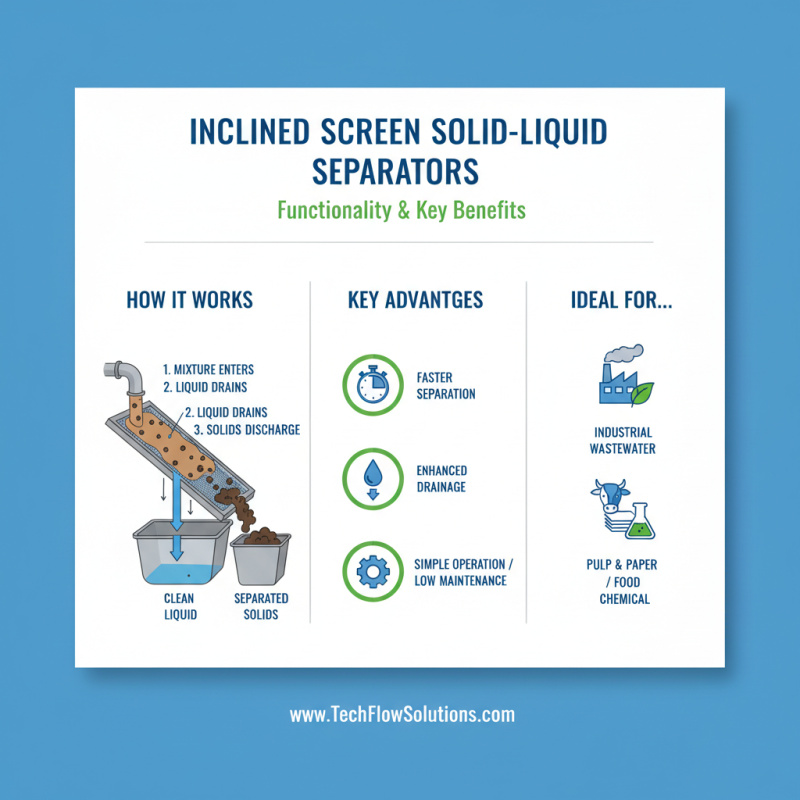
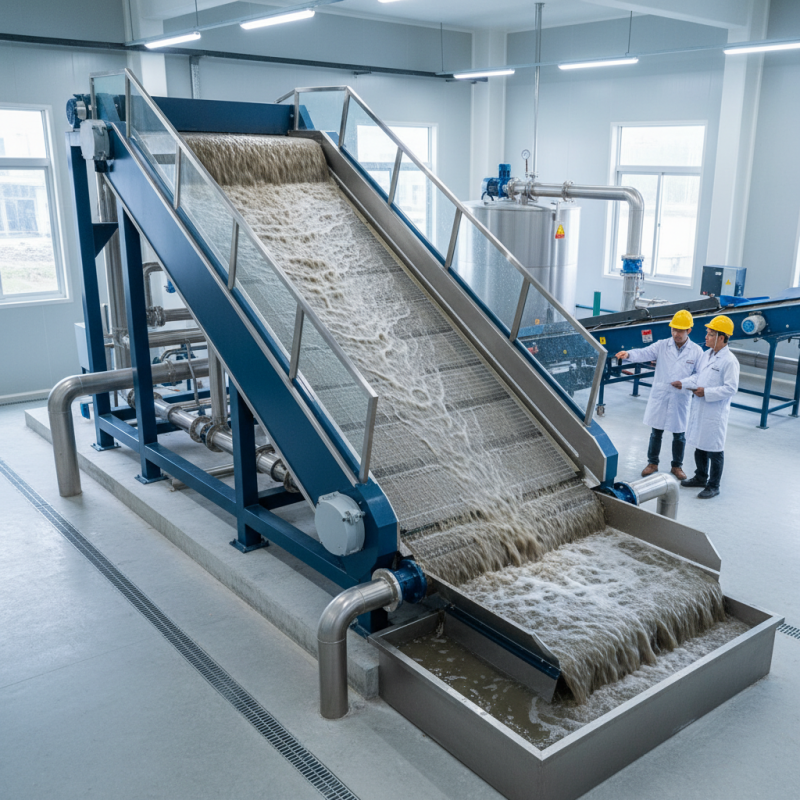
Inclined screen solid liquid separators play a crucial role in various industries. They effectively separate solids from liquids through a simple yet efficient process. The inclined screen allows for better drainage and faster separation, making it ideal for many applications. Understanding how these machines work is essential for effective utilization.
These separators function based on gravity and screen mesh. The liquid mixture enters the separator and flows onto an inclined screen. Solids are retained, while liquid drains through the screen. This gravity-driven process is reliable and minimizes energy consumption. Different mesh sizes allow for the tailoring of separation efficiency. Choosing the right mesh impacts the outcome significantly.
However, challenges may arise. The screen can clog if the particle size is not properly managed. Regular maintenance and cleaning are necessary to ensure optimal performance. Overlooking these aspects can lead to inefficiencies. Knowing the limitations and operational nuances will guide users in making informed decisions. Ultimately, understanding the functionality enhances the separator's effectiveness in any application.
Key Factors to Consider When Selecting a Separator
Selecting an inclined screen solid liquid separator requires careful consideration of several factors. The design and construction of the separator play a crucial role in its performance. Look for high-quality materials that can withstand harsh conditions. Stainless steel is often preferred due to its durability and resistance to corrosion. Ensure that the separator has the right angle and mesh size to optimize solids removal and liquid throughput.
The separator's operating capacity is another key aspect. It should match your specific application needs. Understanding your feed characteristics, such as particle size and concentration, is essential. An underperforming separator can lead to increased downtime and maintenance costs. Reflection on past experiences with separators can provide insights into what may work best for your facility.
Lastly, consider the ease of maintenance and operation. A separator that requires frequent adjustments or repairs can disrupt workflow. Look for user-friendly features that simplify maintenance tasks. However, remember that you may need to adapt based on your unique operational challenges. Balancing these factors can lead to more effective decision-making and improved efficiency in your processes.
Types of Inclined Screen Separators and Their Applications
Inclined screen solid liquid separators are crucial in various industries. They effectively separate solids from liquids, enhancing efficiency in wastewater treatment and other processes. Understanding different types of inclined screen separators can help industries select the right equipment for their needs.
One common type is the wedge wire screen separator. These separators use V-shaped wires to create narrow openings. This design allows for a high flow rate while maintaining effective filtration. They are particularly useful in agriculture and food processing sectors. According to an industry report, wedge wire screens can capture particles as small as 0.2 mm, making them ideal for fine filtration applications.
Another type is the perforated plate separator. These units have holes that allow liquid to pass through while retaining solids. They are versatile and can handle large volumes of slurry. An analysis shows that perforated plate screens can improve solid removal efficiency by up to 85%. However, their effectiveness can vary based on the size and shape of the solids, which should be considered during selection. Proper evaluation is essential to ensure the chosen separator meets specific operational needs.
Evaluating Performance Metrics for Solid Liquid Separators
When selecting an inclined screen solid-liquid separator, performance metrics are critical for ensuring efficiency and reliability. These separators are used in various industries, including food processing and wastewater treatment. Evaluating their performance starts with understanding separation efficiency. This measures how well the system separates solids from liquids. A higher efficiency signifies better performance, leading to reduced operational costs.
Another key metric is throughput capacity. This indicates the volume of material the separator can process over a specific period. It’s vital to match the separator’s capacity to your application needs. A separator that cannot handle the required volume can lead to bottlenecks. Conversely, oversizing could waste resources. Understanding your processing requirements can provide insights into ideal capacity.
Pressure drop is another important performance metric requiring careful consideration. A significant drop can affect separation efficiency and energy consumption. It’s crucial to balance the pressure conditions during operation. Regular monitoring can also help identify potential issues. Users should rely on empirical data and operational history to make informed decisions. Performance metrics can vary based on different operational environments. Hence, a one-size-fits-all approach may not be effective.
Maintenance Tips for Prolonging Separator Lifespan
Proper maintenance of an inclined screen solid liquid separator is crucial for durability. Regular cleaning is essential. Blockages can occur. These prevent optimal performance and lead to wear. Schedule cleaning every couple of weeks, depending on usage. Use appropriate tools to avoid damaging the screen.
Check for wear and tear regularly. Inspect the screen and mechanical parts. Replace any damaged components promptly. Neglecting small issues can lead to bigger problems. Keep an inventory of spare parts. This preparation can save time during unexpected breakdowns.
Monitor the separator’s performance consistently. Watch for changes in flow and efficiency. Small deviations can indicate underlying issues. It’s vital to respond quickly to maintain proper function. Document maintenance activities to track patterns. Reflecting on past issues can inform future maintenance decisions.
How to Choose the Best Inclined Screen Solid Liquid Separator? - Maintenance Tips for Prolonging Separator Lifespan
| Dimension |
Measurement |
Recommendation |
Maintenance Frequency |
| Screen Size |
1.5 m² |
Choose a size appropriate for flow rate |
Every 3 months |
| Tilt Angle |
15° - 30° |
Optimize for material type |
Annually |
| Material Type |
Stainless Steel |
Ensure corrosion resistance |
Monthly inspection |
| Check Frequency |
Daily |
Perform visual checks |
Daily |
| Replacement Parts |
Screens |
Use OEM parts for optimal performance |
As needed |