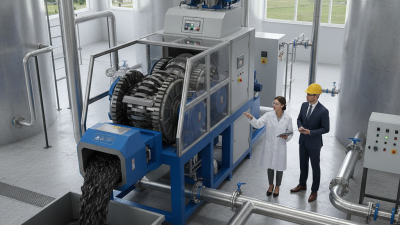
How to Select the Right Dewatering Press for Your Industrial Needs?
Choosing the right dewatering press for industrial applications is crucial. As Dr. Emily Chen, a leading expert in wastewater management, states, “The efficiency of a dewatering press can dramatically impact your operational costs.” This highlights the importance of making an informed choice.
Dewatering presses come in various shapes and sizes. Each model serves a specific industry need. For instance, construction sites might require different specifications compared to food processing facilities. However, many industries overlook key factors while selecting a dewatering press. This can lead to operational inefficiencies and increased costs over time.
Understanding the unique requirements of your operation is vital. Consideration should include factors like feed material types, volume, and desired moisture content. Even the best technology can fail if misapplied. Selecting the ideal dewatering press may seem daunting, but with the right insights, it can be approached systematically. Embracing this process can lead to significant benefits.
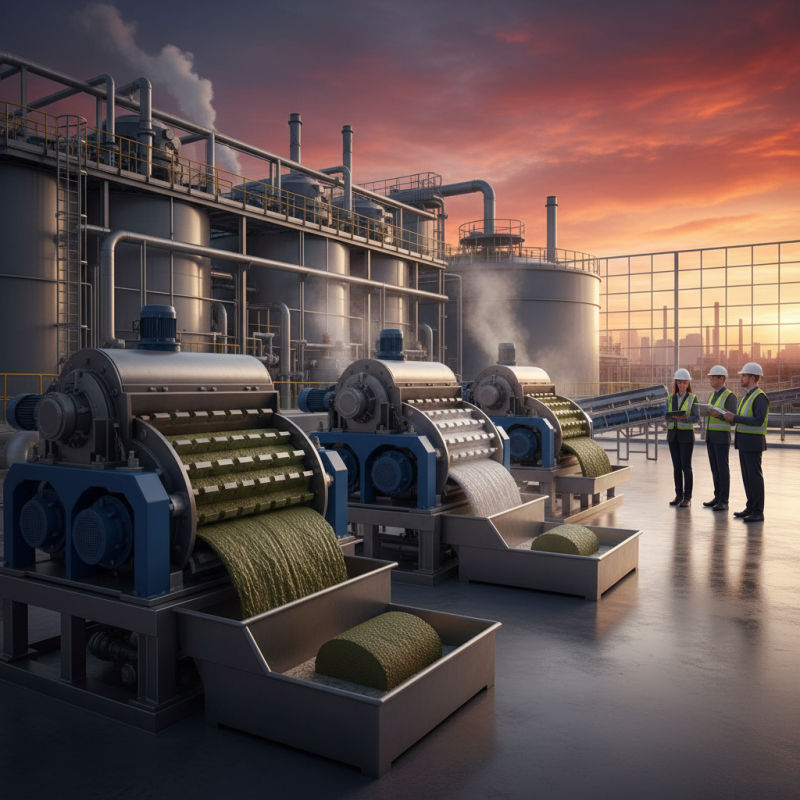
Understanding Dewatering Presses: Types and Technologies
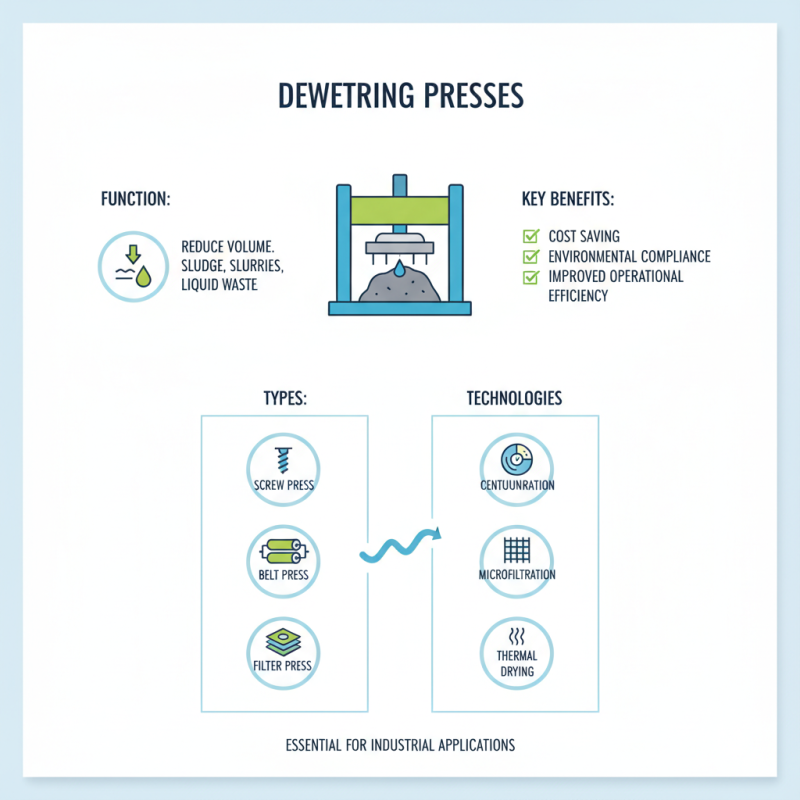
Dewatering presses are essential in various industrial applications. They help in reducing the volume of sludge, slurries, and other liquid waste. Understanding the different types and technologies of dewatering presses can significantly impact operational efficiency.
There are several types of dewatering presses. Belt presses are widely used because of their simple design. They operate using gravity and mechanical pressure. Then, there are membrane filter presses. These utilize flexible membranes to enhance dewatering efficiency. They tend to consume more energy but can produce drier cakes. Each type has unique attributes, and understanding them is crucial.
Technologies vary as well. Some dewatering presses rely on thermal systems, while others favor mechanical means. The choice also depends on the specific material being processed. Not all systems provide optimal results for every application. It's vital to assess your needs carefully. As industry demands change, so should the technology you choose. Proper selection can lead to waste reduction, but missteps can lead to inefficiencies.
Key Factors to Consider When Selecting a Dewatering Press
Selecting the right dewatering press can be challenging. The correct choice can impact efficiency and reduce costs. Start by understanding your material. Know the solids content and particle size. These factors influence the type of dewatering press you need.
**Tip:** Analyze the characteristics of the material. A laboratory test can help determine the optimal settings. Don’t underestimate the importance of moisture levels after dewatering. If they are too high, it can lead to increased disposal costs.
Next, consider the capacity of the dewatering press. Your production volume must match the equipment's throughput. Oversized or undersized machines can lead to inefficiencies. Think about your future needs, too. Will your production scale up? This aspect is often overlooked.
**Tip:** Review your current and projected needs regularly. You may need to adjust your choice as your business evolves. Additionally, look at the ease of maintenance. Complex machines may require skilled operators. This can lead to more downtime and higher operating costs.
Evaluating Your Industrial Needs for Effective Dewatering Solutions
When selecting the right dewatering press, understanding your industrial needs is crucial. Many industries face diverse challenges in managing wastewater. For instance, the food processing sector generates significant sludge, often up to 80% of its waste. Proper dewatering equipment can reduce this volume and lower disposal costs.
Moreover, a report by the Environmental Protection Agency indicates that efficient dewatering can improve solid waste management by 30%. Consider your specific requirements. Are you dealing with sludge that has higher solid content? Or is your focus on volume reduction? Each scenario calls for different specifications.
The design and capacity of dewatering presses vary widely. A press that works well for one industry may not be suitable for another. Understand the types of sludges produced in your processes. Some may need specialized treatments. Each solution has its own set of challenges, making it essential to evaluate your needs carefully. Regular reflections on plant performance and waste characteristics can lead to better decisions.
How to Select the Right Dewatering Press for Your Industrial Needs?
| Criteria |
Description |
Considerations |
| Capacity |
Determine the volume of materials to be dewatered per hour. |
Select a press that can handle the peak capacity needs. |
| Material Type |
Identify the characteristics of the slurry or sludge. |
Ensure compatibility with materials that may have varying particle sizes. |
| Moisture Content |
Assess the current moisture level of the material to optimize drying. |
Higher moisture may require specialized presses. |
| Space Availability |
Measure the physical space designated for the equipment. |
Choose a size that fits within spatial constraints. |
| Energy Efficiency |
Evaluate energy consumption of potential models. |
Select models designed for lower energy usage to cut costs. |
| Maintenance Requirements |
Look into the maintenance needs of the dewatering press. |
Choose options with easy-to-service designs. |
| Cost |
Analyze the total cost, including purchase and operational costs. |
Find a balance between initial investment and long-term savings. |
Cost Considerations: Budgeting for a Dewatering Press Purchase
When considering a dewatering press, budgeting is crucial. Prices vary widely based on size, capacity, and features. It’s essential to assess your specific needs before diving into prices. Think about the materials you’ll be processing. Some materials may require advanced options, increasing costs. Keep maintenance in mind; cheaper models may incur higher upkeep costs over time.
Tips: Always include installation costs in your budget. Unexpected expenses can arise. Check energy consumption too. A machine that seems affordable might consume more power, leading to high bills. Also, don’t forget about the training costs. Staff needs to be proficient in operating the press. Investing in training can improve efficiency and reduce accidents.
Anticipating future needs is another aspect. Your operation's volume may grow. Choose a press with extra capacity, even if it stretches your budget. It might save costs later. Also, consider the resale value. Some models depreciate rapidly. A more durable option could be a smarter investment. Balancing current needs with future growth is tricky but necessary.
Maintenance and Support: Ensuring Long-Term Reliability of Your Press
Maintenance and support are crucial for the long-term reliability of your dewatering press. Regular maintenance ensures your press operates at peak efficiency, reducing the risk of costly downtime. According to industry reports, up to 70% of equipment failures can be traced back to inadequate maintenance practices. This highlights the importance of creating a robust maintenance schedule.
When selecting a dewatering press, consider the availability of technical support. A team that understands your specific needs can make a significant difference. Quick access to parts and expertise can minimize disruptions. It's also essential to train your staff on routine checks. Ignoring small issues can lead to larger problems later.
Tips: Schedule regular inspections to catch potential issues early. Document every maintenance task for better tracking. Invest in training programs for operators to understand the equipment better. Understanding your dewatering press inside and out can lead to a more efficient process, ultimately saving costs and enhancing productivity. Evaluate your choices carefully. Rushing can lead to inadequate support in the long run, impacting your production.
Maintenance and Support: Ensuring Long-Term Reliability of Your Dewatering Press