Why Choose a Wastewater Screw Press for Efficient Wastewater Management
In today's rapidly industrializing world, the management of wastewater has become a pressing concern for municipalities and industries alike. As the demand for efficient and sustainable wastewater treatment solutions grows, the need for innovative technologies has emerged. Among the various options available, the Wastewater Screw Press stands out as a highly effective and eco-friendly method for dewatering and managing wastewater. This equipment not only enhances the efficiency of wastewater treatment processes but also contributes to reducing operational costs and environmental impact.
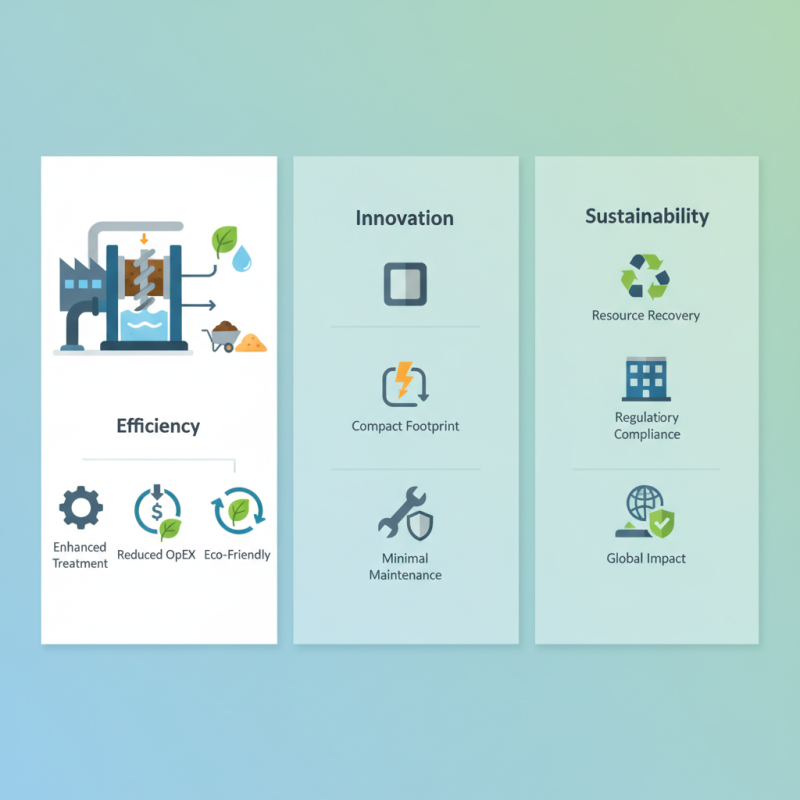
The Wastewater Screw Press operates on a straightforward yet ingenious principle, utilizing a screw mechanism to separate solids from liquids, thereby producing a dry cake that can be easily disposed of or repurposed. Its design offers several advantages, including a compact footprint, low energy consumption, and minimal maintenance requirements. These features make the Wastewater Screw Press a favored choice for facilities seeking to optimize their wastewater management systems while adhering to stringent regulatory standards.
As industries and municipalities increasingly recognize the importance of sustainable practices, the adoption of the Wastewater Screw Press represents a significant step towards achieving efficient wastewater management. This technology not only addresses the challenges of treating and reusing wastewater but also aligns with the global push for environmental conservation and resource recovery. Embracing such advancements is essential for any organization aiming to thrive in a future where sustainable practices are paramount.
Advantages of Using Wastewater Screw Press Over Traditional Methods
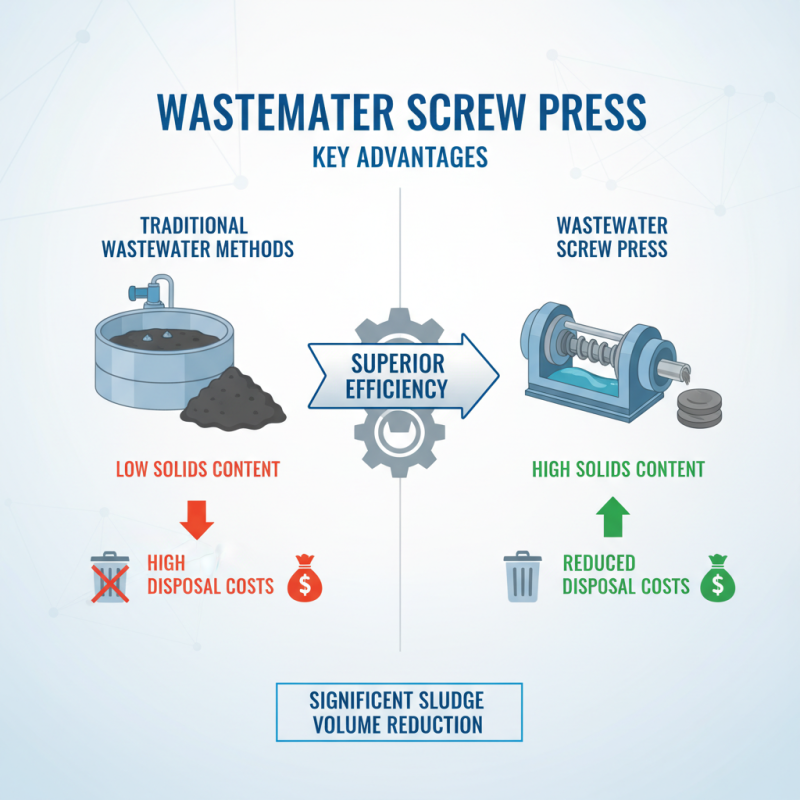
The wastewater screw press has emerged as a superior solution for efficient wastewater management when compared to traditional methods. One of the key advantages is its ability to significantly reduce the volume of sludge produced. By utilizing a continuous dewatering process, the screw press enables operators to achieve higher solids content and minimize the handling and disposal costs associated with wastewater.
Another benefit of using a wastewater screw press is its energy efficiency. Traditional methods, such as belt filters or centrifuges, often require more energy to operate effectively. In contrast, the screw press leverages its design, which reduces the need for high-speed mechanisms and allows for consistent performance with less energy consumption. This translates into lower operational costs and a smaller environmental footprint.
**Tip:** Regular maintenance of the screw press can enhance its performance and lifespan. Keeping the system clean and free of debris will ensure optimal operation and minimize unexpected downtimes. Additionally, monitoring the moisture content of the output can help adjust the process for better efficiency.
Incorporating this technology not only improves waste management practices but also promotes sustainability in industrial processes. The compact design of the screw press allows for easier integration into existing setups, making it a versatile choice for facilities looking to modernize their wastewater treatment processes.
**Tip:** When choosing a wastewater screw press, consider the specific needs of your facility, such as the type of wastewater being processed and the desired end product characteristics. This will ensure you select a system that maximizes efficiency and cost-effectiveness.
Key Operational Mechanisms of Wastewater Screw Press Technology
Wastewater screw press technology is a revolutionary approach to efficient wastewater management, thanks to its unique operational mechanisms. Central to this technology is the design of the screw press, which combines the principles of dewatering and thickening in a single process. The screw mechanism compresses sludge, separating water from solids through pressure and gravity. This process not only minimizes the volume of waste but also increases the concentration of the solids, making disposal or further processing easier and more cost-effective.
When utilizing a screw press, it’s important to monitor the feed rate and consistency of the material being processed. This can significantly affect the efficiency of water removal and the overall performance of the system. **Tip:** Regular maintenance, including cleaning the internal components and checking the alignment of the screw, ensures optimal operation and extends the lifespan of the equipment.
Another key aspect of wastewater screw press technology is its energy efficiency. Unlike traditional methods that require extensive pre-treatment or additional steps for dewatering, screw presses operate with minimal energy consumption. The continuous, self-cleaning nature of the system helps to reduce operational downtimes. **Tip:** Integrating automation systems for real-time monitoring can help operators quickly respond to any inconsistencies in sludge composition, thereby enhancing overall system efficiency.
Wastewater Screw Press Efficiency Comparison
Comparative Efficiency: Screw Press vs. Belt Press in Dewatering
When considering dewatering solutions in wastewater management, the screw press has emerged as a highly efficient alternative to the traditional belt press. One of the primary advantages of the screw press is its ability to handle a diverse range of materials while maintaining a consistently high throughput. The design allows for continuous operation, reducing the need for frequent downtime as seen with belt presses that require regular maintenance and cleaning. This continuous flow of dewatering in the screw press also leads to a more stable process, minimizing fluctuations in performance and enhancing overall reliability.
Moreover, the screw press operates with a lower operational cost. It typically consumes less energy than a belt press, largely due to the absence of high-pressure washing mechanisms that are common in belt systems. This energy efficiency also results in lower operational expenses in the long term. In addition, the solid separation capabilities of the screw press often yield drier cake, which is advantageous for further processing or disposal. As the industry increasingly looks for sustainable solutions, the efficiency and effectiveness of screw presses position them as a modern choice for wastewater treatment facilities seeking to optimize their operations.
Economic Impact: Cost Savings with Screw Press in Wastewater Treatment
The economic impact of utilizing a
wastewater screw press
in treatment facilities is profound, particularly concerning cost savings and operational efficiency.
According to a report by the Water Environment Federation, implementing screw press technology can reduce dewatering costs by up to
50% compared to traditional methods. This significant reduction is primarily attributed to the lower energy consumption and minimized polymer usage, leading to substantial savings over time.
Moreover, a study published in the Journal of Environmental Management revealed that facilities employing screw presses exhibit a
30% decrease in maintenance costs. This is largely due to the simplicity of the screw press design, which reduces wear and tear on equipment and lowers the frequency of mechanical failures.
The incorporation of this technology not only streamlines operations but also enhances the overall sustainability of wastewater management, as facilities can reinvest the savings into further improvements or community services.
As municipalities face growing treatment demands and stringent regulations, adopting cost-effective solutions like wastewater screw presses becomes not only strategic but essential for financial viability.
Environmental Benefits: Reducing Sludge Volume through Screw Press Usage
The environmental benefits of utilizing a wastewater screw press are manifold, particularly in the reduction of sludge volume. Traditional wastewater treatment methods often result in significant sludge generation, leading to increased disposal challenges and costs. By employing a screw press, facilities can achieve a substantial reduction in the volume of sludge produced. This innovative technology efficiently separates excess water from solid waste, resulting in a dry cake that is easier to handle and transport, thereby minimizing the environmental footprint of wastewater management.
Moreover, the reduction in sludge volume contributes to enhanced sustainability practices within wastewater treatment facilities. Less sludge means fewer resources are needed for disposal and reduced greenhouse gas emissions associated with transportation. This not only alleviates the pressure on landfills but also promotes a circular economy by allowing for the potential recovery of valuable materials from the waste. As municipalities and industries strive to meet stricter environmental regulations, the adoption of screw press technology presents an effective solution to achieve more sustainable wastewater management while mitigating environmental impacts.
Why Choose a Wastewater Screw Press for Efficient Wastewater Management - Environmental Benefits: Reducing Sludge Volume through Screw Press Usage
| Dimension |
Value |
| Sludge Volume Reduction (%) |
50-80 |
| Energy Consumption Savings (%) |
30-50 |
| Carbon Footprint Reduction (kg CO2/year) |
2000-5000 |
| Return on Investment (ROI) Years |
2-4 |
| Operational Cost Reduction (%) |
20-40 |
| Maintenance Frequency (per year) |
1-2 |
| Typical Processing Capacity (m³/h) |
10-100 |
| Life Span (years) |
15-20 |