Leave Your Message

Why Choose the Right Blending Tank Agitator?

Choosing the right Blending Tank Agitator is a process decision, not merely a purchasing decision. The impeller must handle viscosity, density, solids loading, temperature, and batch volume without creating unnecessary shear or consuming excessive power. A pale, slowly dissolving powder can reveal poor circulation long before laboratory tests do. The vessel may look active while its lower corners remain stagnant.

Industry reports from Grand View Research and MarketsandMarkets consistently identify process efficiency, product uniformity, and automation as major drivers in the industrial agitator market. Their findings support a practical conclusion: agitator selection should begin with process data, not catalog photographs. Viscosity curves, mixing time, power per volume, impeller diameter, baffle design, and cleaning requirements all matter. A larger motor is not automatically safer. It may increase heat, foam, and operating cost.

Edward L. Paul and his co-authors describe mixing as “the process of reducing or eliminating nonuniformities.” That definition is simple, but often overlooked. A well-designed Blending Tank Agitator should move material through the entire working volume, including the bottom head and wall zones. It should also scale predictably from pilot equipment to production tanks. This is where experience matters. Laboratory results can mislead when geometry changes. Even respected engineering correlations need validation.

The right choice is therefore a balance between measurable performance and operational judgment. This article examines the variables behind that balance, while acknowledging an uncomfortable point: no single agitator design works perfectly for every formulation.
Why Choose the Right Blending Tank Agitator?

What Is a Blending Tank Agitator?

Why Choose the Right Blending Tank Agitator?

What Is a Blending Tank Agitator?

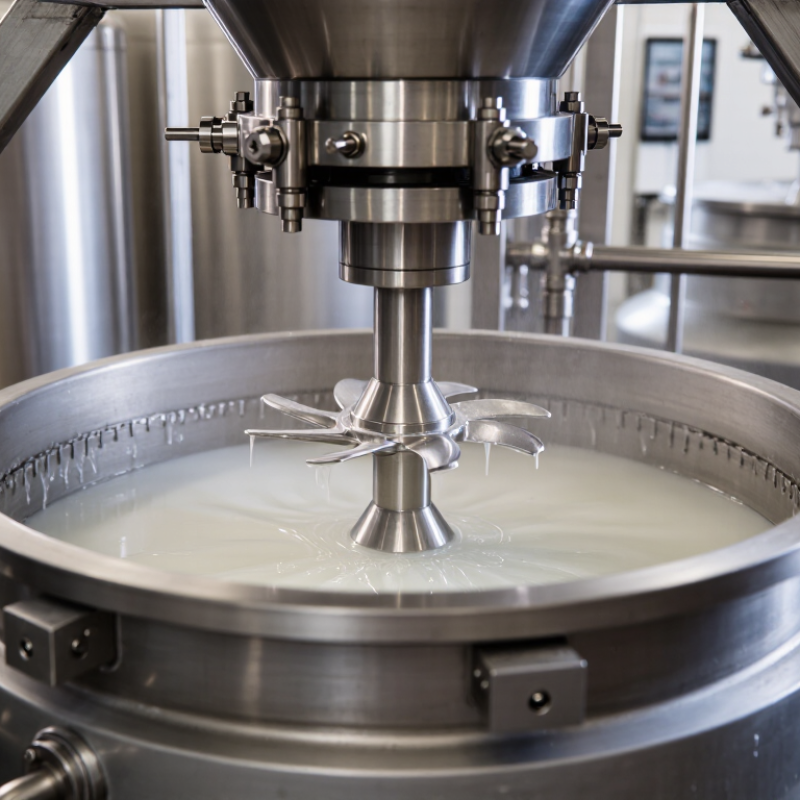
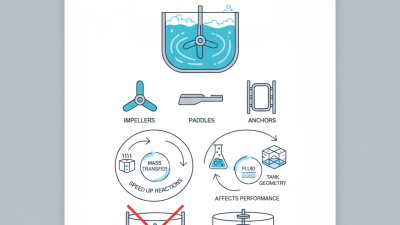
A blending tank agitator is a mechanical mixing assembly installed inside a process vessel. It normally includes a motor, gearbox, shaft, impeller, seals, and support structure. The impeller transfers energy into the liquid, creating controlled circulation throughout the tank. That circulation helps distribute powders, liquids, heat, and suspended particles.

The correct agitator depends on viscosity, density, solids content, tank geometry, and batch volume. A low-viscosity liquid may need a high-speed impeller. A thick syrup usually requires slower movement and higher torque. Baffles can reduce swirling and improve top-to-bottom circulation. Small details matter.

Plant engineers often evaluate mixing time, power consumption, shear, and cleanability during trials. The U.S. Department of Energy’s Improving Motor and Drive System Performance sourcebook reports that motor-driven systems use about 70% of industrial electricity. An inefficient agitator can therefore increase operating costs continuously. The energy loss may remain hidden.

EHEDG guidance also emphasizes hygienic design, drainability, and reduced dead zones in sanitary equipment. These points are practical, not decorative. Yet a specification can still be wrong if it relies only on laboratory results. Real products change with temperature, aging, and ingredient variation. One overlooked variable can produce uneven batches, even when the tank appears to mix well.
How Agitator Design Affects Mixing Performance

Agitator design directly affects circulation, shear, heat transfer, and product consistency. The wrong impeller can leave powder floating, solids settling, or a cold layer near the tank wall. In a 2,000-liter vessel, these problems may remain hidden until sampling reveals different viscosity or concentration levels.

Power demand also deserves attention. The International Energy Agency reports that motor-driven systems consume about 46% of global electricity and nearly 69% of industrial electricity. Agitator geometry therefore matters beyond mixing quality. Diameter, rotational speed, impeller type, and fluid density determine power consumption through the relationship P = NpρN³D⁵. A small speed increase can create a large energy penalty. Small changes matter.

Turbulent liquids often need axial-flow impellers for strong vertical circulation. High-viscosity materials may require wider blades, lower speed, and higher torque. Baffles can reduce vortexing, but excessive turbulence may damage delicate particles or create unwanted foam. Gas-liquid systems add another challenge: poor positioning can reduce gas dispersion and increase residence-time variation. Practical testing remains essential. Computational models help, but real fluids are less predictable than clean laboratory water. The DOE Industrial Decarbonization Roadmap also identifies motor systems as a major industrial energy opportunity, supporting careful agitator sizing rather than automatic oversizing. That assumption fails.

Which Factors Determine the Right Agitator Choice?

Why Choose the Right Blending Tank Agitator?

The right agitator depends on the process, not the tank alone. Product viscosity is often the first screening factor. Water-like liquids may need axial-flow impellers and moderate speed. Thick syrups require higher torque and stronger flow circulation. Suspended solids add another challenge. Their size, density, and settling rate can change the entire design.

Shear sensitivity also matters. Fragile cells, emulsions, and crystals may suffer under aggressive mixing. A useful selection starts with viscosity, density, solids content, batch volume, and target mixing time. Tank diameter, liquid height, baffles, and bottom shape also influence performance. Small details matter. A laboratory result can mislead if the test vessel lacks realistic geometry.

Energy deserves careful attention. The U.S. Department of Energy reports that motor-driven systems consume about 68% of industrial electricity in manufacturing facilities. The IEA’s Energy Efficiency 2023 report also identifies industry as using roughly 37% of global final energy. These figures make motor efficiency, variable-speed control, and correct power sizing practical concerns. More power does not always mean better blending. It can increase heat, shear, and operating cost.

Material compatibility and cleaning requirements should be reviewed early. Hygienic applications may require smooth surfaces, drainable designs, and validated cleaning procedures. Hazardous environments demand properly assessed electrical and mechanical protection.

The difficult part is balancing performance, reliability, and cost. Engineers sometimes over-specify the agitator. That choice feels safe, but it may hide an inefficient process. A stronger decision uses measured data, pilot testing, and honest review of operating conditions.

How to Match Agitator Types to Blending Applications

Choosing a tank agitator begins with the blending application, not the equipment catalog. Low-viscosity liquids often suit axial-flow propellers because they create strong top-to-bottom circulation. They help prevent concentration differences in large tanks. Keep it moving.

Pitched-blade turbines can handle moderate viscosity and suspended solids with balanced circulation. Hydrofoil agitators may reduce power demand while maintaining gentle blending.

For thick products, anchor or helical ribbon agitators provide stronger wall coverage and improve heat transfer. They also require higher torque and careful mechanical design.

In plant trials, I compare viscosity at operating temperature, batch volume, solids content, and mixing time. Tank geometry matters too. A laboratory blend can look uniform while a full tank leaves a quiet bottom zone. I check for vortexing, dead spots, motor load, and sample consistency.

One caution: viscosity data are rarely perfect. Product temperature may change during production, and that can alter the selected agitator’s performance. A smaller impeller is not always inefficient, but it may need higher speed, which can increase shear and air entrainment. The safest choice comes from testing realistic conditions before finalizing the shaft, impeller, and drive.

How to Evaluate Efficiency, Maintenance, and Operating Costs

Why Choose the Right Blending Tank Agitator?

How to Evaluate Efficiency, Maintenance, and Operating Costs

An agitator should match viscosity, batch volume, solids content, and required mixing time. A high-speed impeller may look efficient, yet it can waste energy in a thick formulation. The U.S. Department of Energy reports that motor-driven systems consume about 70% of industrial electricity. This makes motor sizing a direct operating-cost decision, not a minor equipment detail. During evaluation, record power draw, shaft speed, batch temperature, and blend time. A 15-minute reduction per batch may matter more than a small purchase-price difference. Small details matter.

Maintenance also affects real efficiency. Check seal access, bearing loads, gearbox lubrication, and impeller removal time. Operators should inspect vibration, unusual noise, and rising motor current before failures occur. A Deloitte industry report has associated predictive maintenance with 30% lower maintenance costs and 70% fewer breakdowns, although results vary by plant discipline and data quality. That limitation deserves attention. Sensors alone cannot repair poor procedures. Keep spare seals available, document torque settings, and compare current readings with a clean baseline. ISO 55000 asset-management principles support this lifecycle approach, but many facilities still measure only monthly energy use. That gap can hide short overloads, inefficient starts, and gradual mixing performance loss. A practical assessment should include labor hours, cleaning delays, rejected batches, and disposal-related losses.

Why Choose the Right Blending Tank Agitator?

How to evaluate efficiency, maintenance, and operating costs using representative engineering benchmark indices. Lower values indicate better performance.

Interpretation: Hydrofoil and propeller agitators generally require less power for low-to-medium-viscosity liquids, while anchor agitators are better suited to high-viscosity products but typically involve higher energy demand and maintenance effort.