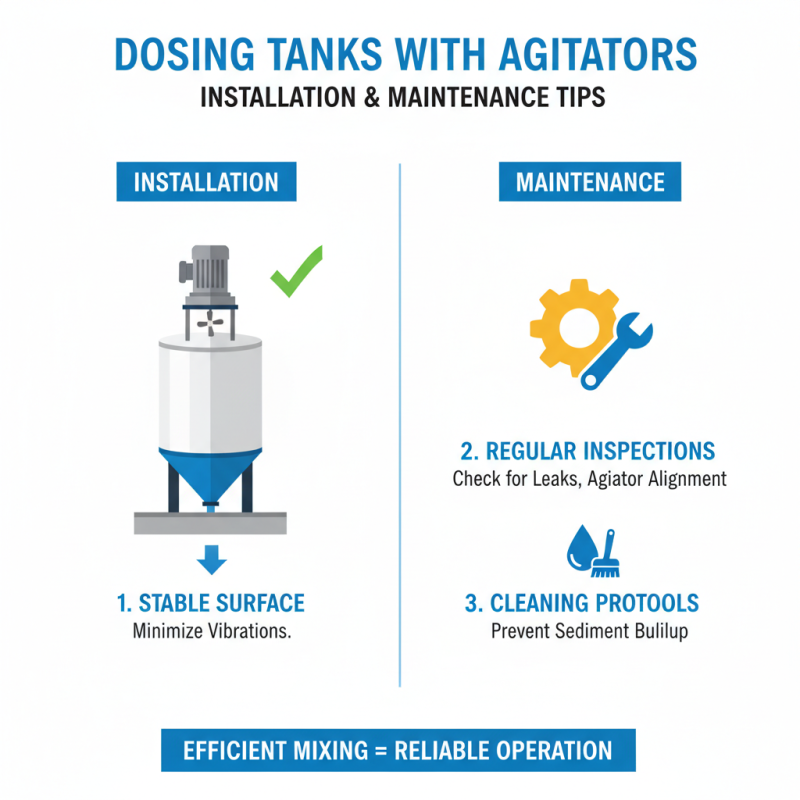
Best Dosing Tank With Agitator For Your Needs?
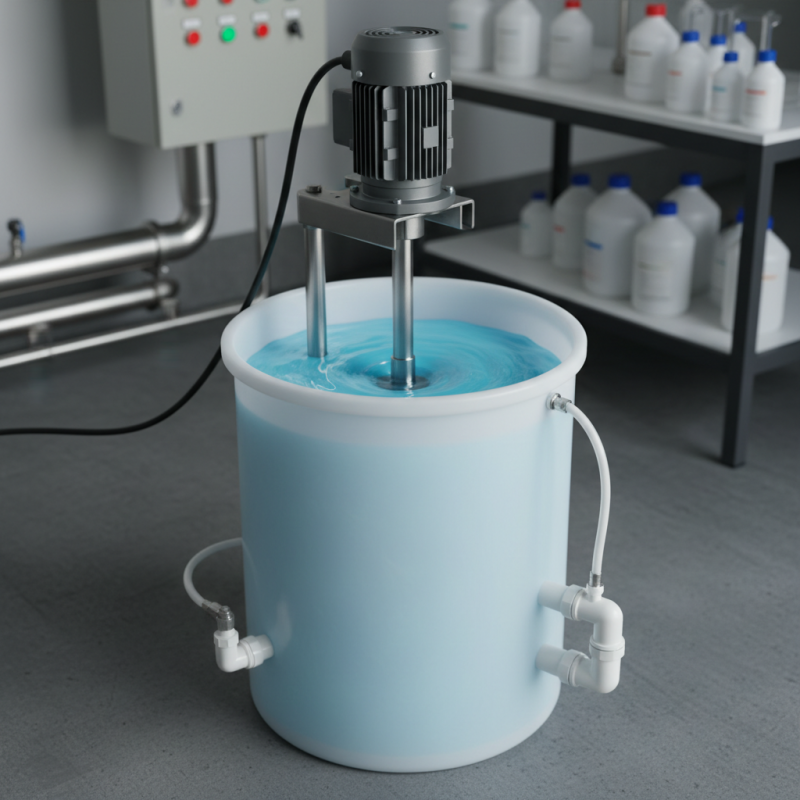
Choosing the right Dosing Tank With Agitator is crucial for efficient operations. It impacts chemical dosing accuracy and mixing efficiency. An ideal dosing tank needs features suited to your specific applications.
When evaluating options, consider the tank capacity, material compatibility, and agitator design. Each characteristic influences performance and longevity. A poorly chosen tank can lead to operational challenges. You might experience uneven mixing or system failures if the wrong material is used.
Experts recommend focusing on reliable brands with good user feedback. Research is essential, as not all tanks meet industry standards. You’ll want a solution that balances price with performance. Reflecting on your specific needs will help avoid common pitfalls in selection.
Understanding the Importance of Dosing Tanks with Agitators
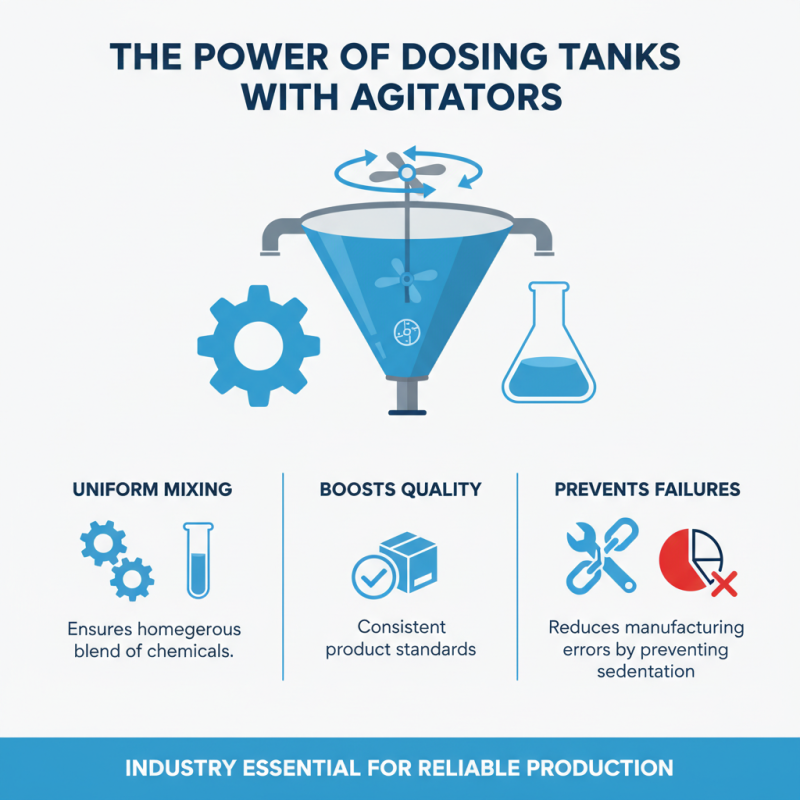
Dosing tanks with agitators play a crucial role in various industries. These tanks ensure uniform mixing of chemicals or substances, which is vital for consistent product quality. According to industry reports, about 70% of manufacturing failures are attributed to inadequate mixing. With an agitator, materials mix properly, preventing sedimentation and separation.
Proper agitation not only improves product quality but also enhances operational efficiency. Efficient mixing can reduce processing time by up to 30%, as stated in a recent study. Moreover, without an agitator, the risk of uneven distribution increases, leading to potential safety hazards. For instance, improper chemical dosing can result in reactions that may endanger workers and equipment.
In addition to operational benefits, dosing tanks with agitators can provide flexibility. They can handle various viscosities and densities, adapting to different processes. However, choosing the right type of agitator requires careful consideration, as not all designs suit every application. Reflecting on past implementations reveals some systems may underperform due to an ill-suited agitator type. Understanding specific needs is essential for maximizing benefits and avoiding costly mistakes.
Key Features to Consider When Choosing a Dosing Tank
When selecting a dosing tank with an agitator, understanding key features is crucial. You need to focus on the tank material. Tanks made of durable materials like polyethylene or stainless steel resist corrosion and wear. This longevity saves costs in the long run.
Also, consider the capacity of the tank. Larger tanks may seem convenient, but they also require more space. Think about your current and future needs. A tank with flexible sizing options can adapt to changes in your processes.
Tips: Measure your available space before purchasing. Ensure accessibility for maintenance.
Agitator speed is another important aspect. Adjustable speeds can enhance mixing efficiency, especially for varying liquid viscosities. However, be aware that higher speeds may lead to foam production. Balancing efficiency with foam control is essential.
Finally, pay attention to safety features such as overflow protection and level sensors. Implementing these features can prevent spills and leaks. Reflect on your operational environment; safety should never be an afterthought.
Types of Agitators and Their Impact on Mixing Efficiency
When it comes to mixing, the type of agitator can greatly affect efficiency. Different agitators create various flow patterns in liquids, leading to distinctive mixing results. For instance, turbine agitators generate high shear forces, which are ideal for dispersing solids or creating emulsions. In contrast, propeller agitators produce gentle mixing, suitable for blending sensitive materials without damaging them.
Selecting the right agitator often requires a balance between mixing speed and energy consumption. Some might notice that while high-speed mixing is effective, it can lead to increased wear on equipment. Others may find that slower mixing results in a uniform mixture but takes more time. It is crucial to match the agitator type with the specific application to achieve the desired outcome.
Understanding fluid dynamics is essential when assessing the impact of agitators. Not all applications will benefit from the same design. Conducting trials could reveal less effective mixing strategies, prompting a re-evaluation. The ongoing pursuit of optimizing mixing processes encourages professionals to reflect on their current setups and consider adjustments, ensuring a continuous improvement loop in operational practices.
Best Dosing Tank With Agitator For Your Needs? - Types of Agitators and Their Impact on Mixing Efficiency
| Agitator Type |
Mixing Efficiency |
Ideal Applications |
Tank Size Compatibility |
| Mechanical Agitator |
High |
Chemicals, Paints |
500 - 5000 Liters |
| Magnetic Agitator |
Moderate |
Pharmaceuticals, Food |
100 - 1000 Liters |
| Pneumatic Agitator |
Good |
Wastewater, Slurries |
1000 - 10000 Liters |
| Hydraulic Agitator |
Very High |
Heavy Mixing, Industrial |
5000 - 20000 Liters |
Applications of Dosing Tanks in Various Industries
Dosing tanks with agitators play a crucial role in various industries. They ensure accurate mixing and dosing of chemicals, essential for processes in water treatment, food production, and pharmaceuticals. In water treatment, these tanks help evenly distribute chemicals, providing clean and safe water. The agitator keeps the mixture homogenous, preventing sedimentation and ensuring efficiency.
In the food industry, dosing tanks are vital for ingredient mixing. They precisely measure and combine flavors, preservatives, and other components. The meticulous agitation process enhances product consistency. However, challenges arise with contamination risk and the need for thorough cleaning. It’s critical to balance efficiency with hygiene standards.
Pharmaceutical manufacturers rely heavily on dosing tanks. They require exact chemical compositions for medication production. Agitators guarantee uniformity, crucial for patient safety. Still, the complexity of formulations may lead to errors if not monitored well. Regular maintenance and calibration of dosing systems are necessary to prevent mishaps. In these sectors, the choice of the right dosing tank and agitator can significantly impact overall productivity and quality.
Applications of Dosing Tanks in Various Industries