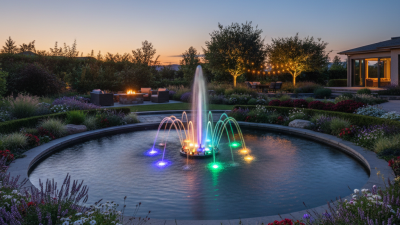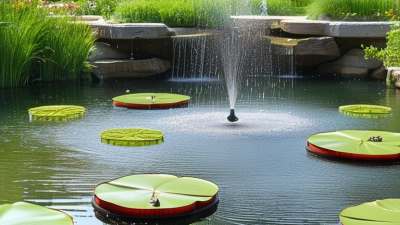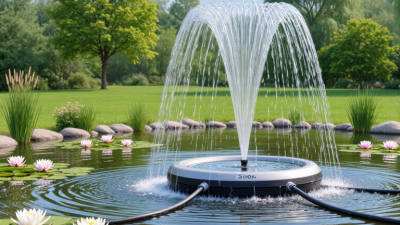
Choosing a Floating Water Fountain For Pond involves more than selecting an attractive spray pattern. The fountain must suit the pond’s surface area, depth, power supply, and surrounding landscape. A small garden pond can look crowded with a powerful display. A broad lake may need stronger circulation for visible movement and improved aeration. Measure carefully. Guesswork becomes expensive.
Greg Wittstock, founder of Aquascape and a recognized water-feature professional, often emphasizes this practical principle: “A pond should look natural, not like a swimming pool with decorations.” That idea matters when comparing fountain height, nozzle style, lighting, and motor capacity. A calm pond may benefit from a gentle, fan-shaped spray. A larger pond might need a high-reaching pattern that remains visible from the shoreline. Wind changes everything. A beautiful spray can drift toward pathways, docks, or neighboring property.
Performance deserves equal attention. Check the pump’s flow rate, operating depth, cable length, and cleaning access before purchasing. Leaves, algae, and mineral buildup can reduce performance within weeks. Maintenance is not glamorous. It is necessary. Solar models can reduce wiring concerns, but cloudy weather may limit their runtime. Electric models offer steadier operation, yet they require professionally installed, weather-resistant connections.
There is no perfect fountain for every pond. I would not choose appearance first, although many buyers do. Observe the pond at different times, consider fish and wildlife, and select a Floating Water Fountain For Pond that balances beauty, circulation, safety, and realistic maintenance. The most impressive model may still be the wrong one.
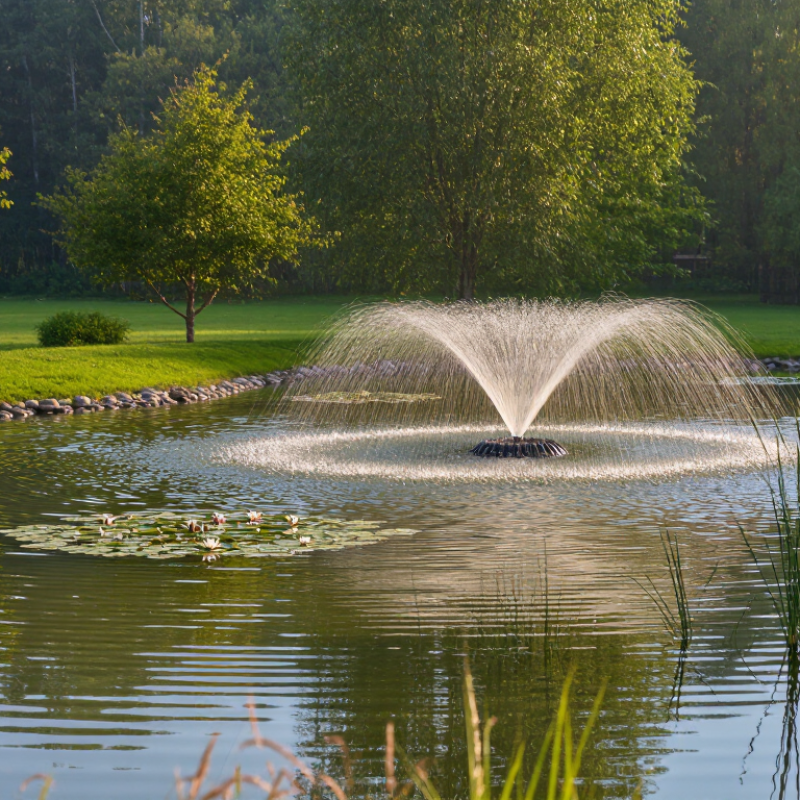
A floating pond fountain usually falls into three practical types: vertical spray, aerating, and solar-powered. A vertical spray fountain creates a tall, symmetrical plume. It suits ponds where visual height matters and water can fall safely within the shoreline. Measure the pond’s width before choosing a nozzle. A wide spray can wet nearby paths, benches, or electrical equipment.
An aerating fountain is designed more for water movement than decoration. Its broad, low spray exposes more water to air and can improve oxygen exchange near the surface. This may help reduce stagnant areas, but it cannot replace deep-water aeration in a large pond. Check the pump’s flow rate, operating depth, and expected coverage. The wrong model may look attractive while leaving corners still and cloudy.
Solar fountains are convenient for small ponds and locations without nearby wiring. Their output changes with sunlight, however. Clouds can turn a lively display into a weak ripple. Electric floating fountains usually provide steadier performance and better control, but they require weather-safe installation and protected connections. I once selected a fountain by spray height alone. That assumption was wrong. The splash disturbed fish and emptied the pond faster than expected. Now I consider fish habitat, evaporation, wind direction, and cleaning access. A removable intake screen also matters. Leaves collect quickly in autumn. Use a secure tether, because even a balanced fountain can drift after heavy rain.
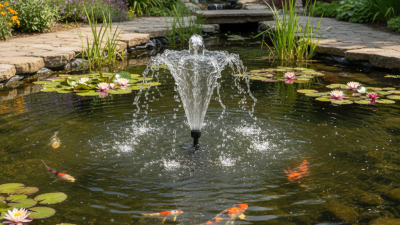
How to Choose a Floating Water Fountain for Pond?
Match the fountain to pond area before comparing spray patterns. A practical starting point is a display diameter below half the pond’s narrowest width. This leaves a visible water border and reduces splash loss. For a 20-meter-wide pond, a 6–8-meter pattern is usually more manageable than a full-width display. Wind changes everything. Measure the pond during typical windy conditions, not only on a calm morning.
Water depth is equally important. Many floating units need approximately 0.6–1 meter of clear water beneath the intake. Keep the pump above soft sediment, leaves, and submerged weeds. A shallow pond may require a low-profile intake or a smaller pump. Oversizing can create excessive turbulence, expose the intake, and move sediment into the water column. Depth matters. Measure twice.
The U.S. EPA’s 2017 National Lakes Assessment identified excess phosphorus as a widespread stressor, affecting roughly 40% of assessed lakes. A fountain can improve circulation, but it cannot correct nutrient loading alone. The ASCE/EWRI Standard 2-06 also shows why oxygen-transfer claims need controlled testing; horsepower alone is not a reliable performance measure. Check flow rate, operating depth, spray diameter, and power use together. My first estimate is often too optimistic when wind and algae are ignored. Leave room for adjustment.
Use the guide below as a practical starting point for selecting a floating fountain. Actual performance depends on pump efficiency, nozzle design, wind, water quality, and the desired spray pattern.
| Pond Surface Area | Recommended Fountain Diameter | Typical Pump Flow Rate | Minimum Water Depth | Suggested Spray Height | Best-Fit Pond Type | Planning Considerations |
|---|---|---|---|---|---|---|
| Up to 500 sq ft (up to 46 m²) |
18–24 in (46–61 cm) |
1,200–2,500 gallons per hour (4,500–9,500 L/h) |
18–24 in (46–61 cm) |
2–4 ft (0.6–1.2 m) |
Small garden ponds and compact decorative ponds | Choose a low-profile unit to reduce splash-out. Keep the fountain away from pond edges, plants, and shallow shelves. |
| 501–1,500 sq ft (47–139 m²) |
24–36 in (61–91 cm) |
2,500–5,000 gallons per hour (9,500–19,000 L/h) |
24–30 in (61–76 cm) |
3–6 ft (0.9–1.8 m) |
Residential ponds and medium ornamental water features | A moderate spray can improve circulation without producing excessive turbulence. A stable, level float helps maintain an even pattern. |
| 1,501–5,000 sq ft (140–465 m²) |
36–48 in (91–122 cm) |
5,000–10,000 gallons per hour (19,000–38,000 L/h) |
30–36 in (76–91 cm) |
5–8 ft (1.5–2.4 m) |
Large residential ponds, estate ponds, and small community ponds | Allow sufficient open water around the unit. Consider wind direction, electrical-cable routing, and possible spray drift. |
| 5,001–15,000 sq ft (466–1,394 m²) |
48–72 in (122–183 cm) |
10,000–20,000 gallons per hour (38,000–76,000 L/h) |
36–48 in (91–122 cm) |
6–12 ft (1.8–3.7 m) |
Large landscape ponds and farm or recreational ponds | Use a larger float and secure anchoring. Higher spray patterns need more clearance from walkways, structures, and overhead obstacles. |
| 15,001–50,000 sq ft (1,395–4,645 m²) |
72–96 in (183–244 cm) |
20,000–40,000 gallons per hour (76,000–151,000 L/h) |
48–60 in (122–152 cm) |
8–15 ft (2.4–4.6 m) |
Large recreational ponds and spacious landscape water bodies | Check the pond’s electrical supply and water depth at the installation point. A strong anchor system is important in wind-exposed locations. |
| More than 50,000 sq ft (more than 4,645 m²) |
96 in or larger (244 cm or larger) |
40,000 gallons per hour or higher (151,000 L/h or higher) |
60 in or deeper (152 cm or deeper) |
12–20 ft (3.7–6.1 m) |
Very large ponds, public spaces, and lake-style installations | Obtain a site-specific design. Water depth, wind loading, anchoring, power capacity, aeration needs, and local safety requirements should be professionally assessed. |
Important: Pond area alone does not determine fountain size. Measure the actual water depth at the proposed installation point, maintain adequate clearance from the shoreline, and select equipment that is rated for continuous outdoor use. A fountain improves surface circulation and aeration, but it does not replace a complete water-management system for heavily stocked or polluted ponds.
How to Choose a Floating Water Fountain for Pond?
Choosing a floating water fountain starts with pump power. Match the pump to your pond’s size, depth, and desired spray pattern. A pump’s maximum flow rate rarely reflects real performance. Hose length, intake screens, and water depth can reduce output. Check the rated flow at the intended lift height. More power is not always better. An oversized pump may create heavy splashing, uneven circulation, and unnecessary evaporation. A modest pump can work well in a small pond.
Spray height also affects appearance and performance. Measure the vertical distance from the water surface to the spray’s highest point. Wind can push a tall spray toward nearby paths, plants, or electrical equipment. For this reason, choose an adjustable nozzle when possible. A lower, wider pattern may remain attractive during breezy weather. Tall displays often look impressive in product images, but real ponds are less predictable. I once underestimated wind exposure during planning, and the spray reached farther than expected.
Water coverage matters more than height alone. Observe whether the fountain moves water across the pond or leaves quiet corners. A broad spray can improve circulation, but floating plants, rocks, and irregular edges may block movement. Measure the visible splash diameter on a calm day, then inspect the pond again after several hours. Look for stagnant debris near the banks. No calculation is perfect. A small adjustment in pump power or nozzle position may improve coverage more than buying a larger unit.
Compare typical pump power levels with spray height and water coverage. Higher pump power can increase both performance measures, but nozzle type, hose length, water depth, and installation conditions also affect the final result.
The figures represent practical, non-brand-specific fountain configurations: coverage is the approximate spray diameter, while spray height is the maximum vertical reach under suitable operating conditions.
Choosing a floating water fountain starts with energy use, not appearance. Check the pump’s wattage and match it to your pond’s surface area. A large spray pattern usually demands more electricity. Running a 150-watt unit for eight hours daily can noticeably increase monthly consumption. A timer can reduce waste while preserving daytime aeration. Solar models may help, but cloudy weather can weaken performance.
Materials affect service life. UV-resistant plastic keeps the float lighter, while stainless steel components resist rust and staining. Inspect the power cable for cracking, especially where it leaves the water. I once chose a powerful fountain without measuring the outlet load. The spray looked impressive, but the operating cost was higher than expected. That choice was not perfect.
Maintenance should fit your routine. Remove leaves from the intake screen every few days during autumn. Clean mineral deposits from the nozzle with a soft brush and diluted vinegar. Never scrape delicate surfaces with metal tools. Check anchors after storms, because wind can push a floating unit toward the pond edge. Replace damaged seals promptly. Small leaks can expose electrical parts and shorten the pump’s life. Keep a maintenance record with cleaning dates, observed noise, and water clarity. Oddly, louder operation often appears before visible failure. A fountain that becomes noisy may have a blocked intake, worn bearing, or low water level. Experienced pond owners also measure water loss before blaming the equipment. Evaporation and splashing can make a healthy pump seem inefficient.
Choosing a floating water fountain for a pond requires more than comparing spray height. Safety, installation, and long-term cost often determine whether the feature remains reliable.
Look for a sealed motor housing, an intake guard, and automatic thermal protection. A ground-fault protection device should safeguard the power connection. Keep electrical components above the waterline whenever possible. I once underestimated cable movement near the pond edge. Wind pulled it against a sharp stone, creating avoidable wear. Use a weighted cable route, protected connectors, and a stable anchor. Small details matter. Check the installation manual before selecting the fountain’s position. Water depth, wind exposure, and nearby trees can affect performance. Leave enough space to remove the unit for cleaning. A local qualified electrician should inspect permanent outdoor connections.
Purchase price is only one part of the total cost. Estimate electricity use from the motor’s wattage and daily operating hours. Add anchors, replacement filters, cable protection, seasonal storage, and occasional pump servicing. A larger spray may consume more power and require stronger anchoring. That visual effect can become expensive. Compare the expected service life with the cost of replacement parts. Choose components that are easy to inspect and clean. Hard-to-reach screens encourage neglected maintenance, even when the owner has good intentions. Keep invoices, operating notes, and maintenance dates. These records support practical decisions when performance changes.