What is Volute Dewatering Press and How Does It Work?
The Volute Dewatering Press is an innovative equipment used extensively in wastewater treatment and sludge management. According to a recent report by the Water Environment Federation, approximately 60% of wastewater treatment facilities are investing in advanced dewatering technologies. This highlights the growing need for effective, reliable solutions. Patrick Juniper, a leading expert in water treatment technologies, states, “The Volute Dewatering Press revolutionizes how we handle sludge, making processes more efficient and sustainable.”
This technology employs a unique spiral design, allowing for high solid-liquid separation efficiency. The Volute Dewatering Press can reduce the volume of waste significantly. Traditional methods can fall short in performance, leading to higher operational costs. In some cases, facilities report as much as a 30% increase in efficiency when switching to a Volute Dewatering Press. This shift not only mitigates waste handling issues but also emphasizes the importance of environmental sustainability.
However, it is crucial to consider the challenges associated with its implementation. Initial costs and the need for training personnel can be barriers for some facilities. As technology evolves, ongoing research and feedback are essential for maximizing the benefits of the Volute Dewatering Press. Effective operation demands constant reflection and adaptation to achieve desired outcomes.
What is a Volute Dewatering Press?
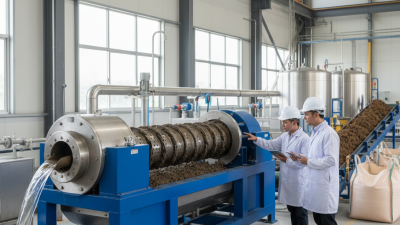
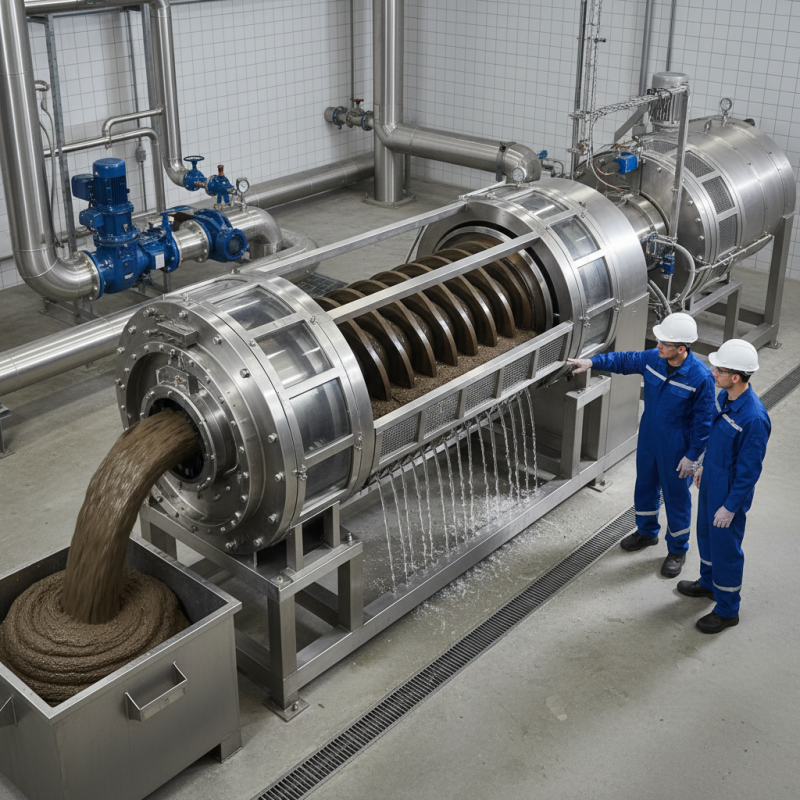
A Volute Dewatering Press is an innovative machine used in wastewater treatment. It efficiently separates liquids from solids. This machine finds applications in various industries, including food processing and municipal waste management. It helps reduce the volume of sludge, making it easier and cheaper to dispose of. Its design focuses on maximizing efficiency while maintaining a compact footprint.
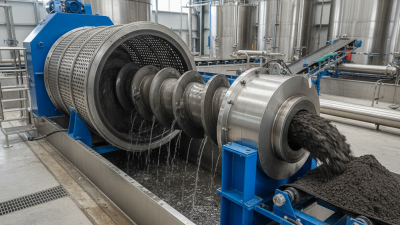
The functioning of a Volute Dewatering Press revolves around its unique spiral structure. Wastewater enters the volute chamber, where a gradual reduction in diameter occurs. This design generates an increasing pressure that compresses the solids. As the solids are pushed through the chamber, water is expelled. The final product is a drier sludge cake, which is easier to handle. However, achieving optimal dryness can be challenging. Some users may struggle with adjusting the pressure settings.
In practice, not all installations yield the intended results. Variations in feed characteristics can affect performance. Continuous monitoring is essential. Regular maintenance ensures smooth operation and enhances reliability. It's important to have expertise when operating these machines. Knowledgeable operators can troubleshoot issues, leading to improved efficiency. Understanding the nuances of the Volute Dewatering Press can significantly influence the overall treatment process.
What is Volute Dewatering Press and How Does It Work?
| Feature |
Description |
| Design |
The volute press features a spiral design that enhances the pressure applied during dewatering. |
| Functionality |
It operates through a combination of gravity and mechanical pressure to separate solids from liquids efficiently. |
| Applications |
Widely used in wastewater treatment, sludge dewatering, and various industrial processes. |
| Advantages |
High throughput, compact design, lower energy consumption, and reduced operational costs. |
| Environmental Impact |
Helps in reducing the volume of waste, promoting sustainability through efficient water recovery. |
| Operational Mechanism |
Involves a feed chamber, screw mechanism, and dewatering zone to achieve desired solid-liquid separation. |
Key Components of the Volute Dewatering Press
The Volute Dewatering Press is an advanced solution for wastewater treatment. Its design focuses on efficiency and effectiveness. The press includes several key components that work together seamlessly.
The first crucial component is the volute chamber. This chamber plays an essential role in separating solids from liquids. It utilizes a tapered geometry to create pressure and facilitate dewatering. This design helps to achieve higher solids concentration, which is desirable in many industrial applications.
Next, we have the screw spindle. It drives the dewatering process by moving materials through the system. As materials travel, the pressure increases. This action compresses the solids and further extracts water. The reliability of the screw spindle is vital for consistent performance. While the press is effective, some may encounter challenges, such as occasional blockages. Regular maintenance is important to ensure optimal operation.
Another key aspect is the hydraulic system. It controls the pressure and flow within the press. This system must be monitored closely to maintain proper function. Any deviations could lead to inefficiencies. Adjustments may be needed to accommodate varying feed conditions. Using these components together allows the Volute Dewatering Press to achieve impressive results, yet users must remain vigilant to ensure long-term reliability.
Volute Dewatering Press Performance Data
Principle of Operation: How a Volute Dewatering Press Works
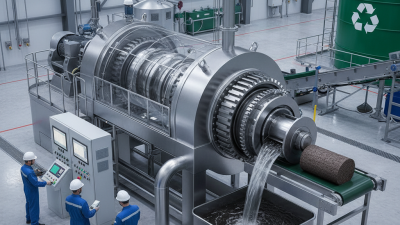
The Volute Dewatering Press is an innovative device used in various industries to efficiently reduce liquid content in solid waste. Its operation revolves around a unique design that combines a spiral chamber with a dewatering zone. This setup ensures the maximum extraction of water from sludges and slurries. As material enters the volute, it gradually gets compressed. The increasing pressure forces water out, allowing for better material handling.
Achieving effective dewatering requires understanding the characteristics of the material being processed. Different materials may respond uniquely to the pressure applied in the volute chamber. Consistent monitoring of moisture content can help optimize the operation. Adjusting the settings for specific waste types can significantly improve efficiency.
**Tips:** Always conduct a preliminary test on your sludges. This can save time and fine-tune the dewatering process. If the output moisture content is higher than expected, check for blockages in the system. Regular maintenance is crucial to avoid potential failures. Recognizing subtle changes in the system's behavior can enhance overall performance.
Advantages of Using Volute Dewatering Presses in Industry
Volute dewatering presses have gained popularity in various industries for their efficiency and reliability. These machines are engineered to reduce the water content in sludge, which is critical for waste management processes. By using a unique volute design, they provide excellent compression and allow for optimal solids separation. This technology helps facilities minimize waste volume and lower disposal costs.
The advantages of using volute dewatering presses are significant. They offer high-capacity processing, which is ideal for wastewater treatment plants and other large-scale operations. Their compact design occupies less space, making them suitable for facilities with limited room. Additionally, they consume less energy compared to conventional dewatering equipment. This energy efficiency can lead to cost savings over time, benefiting organizations looking to enhance their sustainability efforts.
Despite these benefits, there are challenges to consider. Some facilities may require more maintenance to keep the equipment running smoothly. Users must also ensure they are operating within the optimal conditions specified by manufacturers. Proper training for operators is crucial to maximize performance and avoid common pitfalls. Balancing these challenges with the advantages is vital for successful implementation in any industry setting.
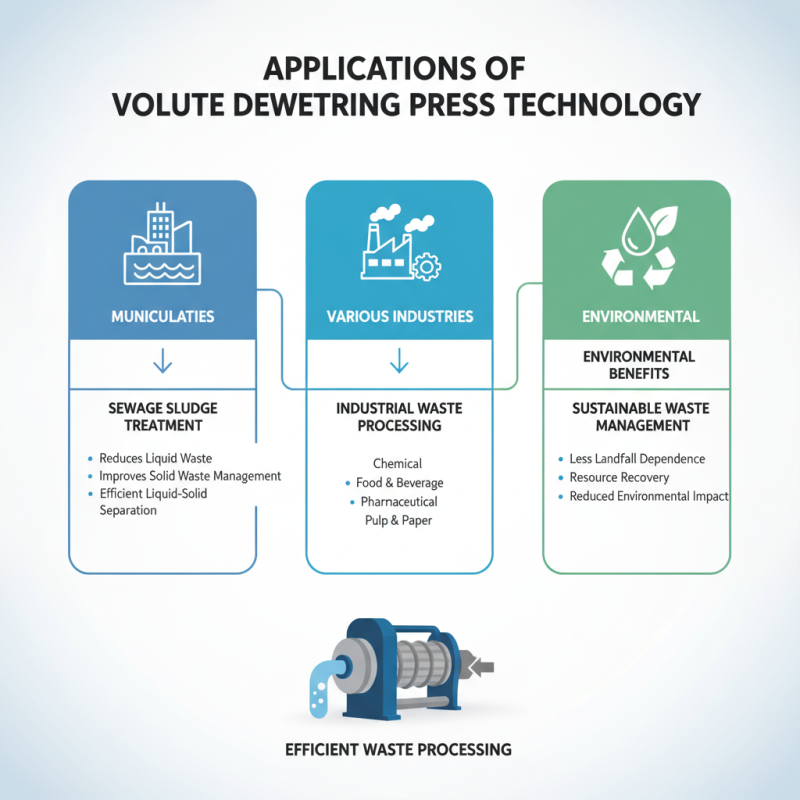
Applications of Volute Dewatering Press Technology
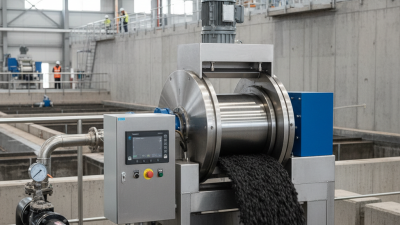
Volute dewatering press technology is increasingly popular across various industries. It effectively reduces liquid waste while improving solid waste management. Many municipalities use this technology to treat sewage sludge. By efficiently separating liquids from solids, facilities achieve remarkable results in waste processing.
In the food processing sector, volute dewatering presses optimize waste management. These presses handle leftover materials, such as fruit and vegetable pulp. This process minimizes landfill use and simplifies disposal. It is crucial for companies to assess their waste output regularly. Understanding waste composition can lead to better dewatering solutions.
Meat and poultry processing industries also benefit from volute technology. These operations generate significant liquid waste. The press helps to recover valuable resources from byproducts. However, some users report challenges with maintenance and operation management. Regular training can address these issues, ensuring effective and reliable use of the equipment.
Tip: Always review performance metrics. This helps identify areas for improvement in your dewatering processes. Regular assessments empower industries to enhance their waste management practices significantly.