10 Essential Tips for Choosing a Dosing Tank With Agitator?
Choosing the right Dosing Tank With Agitator is crucial for efficient operations. Renowned expert, Dr. Alex Thompson, emphasizes, "The right tank enhances mixing and efficiency." His insights highlight how selecting a proper tank can impact production quality.
When considering a Dosing Tank With Agitator, various factors must be evaluated. The design, material, and capacity all play a role. Additionally, understanding the specific requirements of your process is vital. An agitator that works well in one application may underperform in another. Analyzing past choices can reveal what works and what doesn’t.
The decision-making process often has its challenges. Sometimes, industry standards may clash with unique business needs. This is where expertise becomes essential, guiding users through complexities. A well-chosen Dosing Tank With Agitator not only improves product consistency but also addresses operational hurdles effectively.
Understanding the Purpose and Function of a Dosing Tank With Agitator
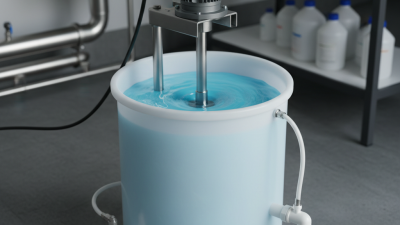
Dosing tanks with agitators play a critical role in various industries. They ensure substances are mixed thoroughly for accurate dosing. The agitator keeps materials in motion, preventing settling or separation. This is especially crucial for viscous liquids or those with solids. An effective mixing process enhances the consistency of the final product.
Understanding the function of a dosing tank is essential. It serves as a reservoir, allowing for precise measurements and delivery of chemicals. Without an agitator, achieving uniformity can be a challenge. It's easy to overlook the mixing process, but doing so can lead to production inconsistencies. Operators often grapple with the decision of tank size and shape, which can significantly affect performance and efficiency.
Maintenance is another aspect to consider. Regular checks on the agitator's performance prevent unexpected failures. While many prefer automated systems, manual adjustments may still be required. A reliable dosing tank should be easy to operate but also allow for flexibility. Each installation presents unique challenges, and adaptability is key in overcoming them.
Key Factors to Consider When Selecting the Right Dosing Tank Size
Choosing the right dosing tank size is crucial for operational efficiency. The tank must meet specific requirements based on the application and materials used. A tank that is too small may lead to frequent refills, causing interruptions. Conversely, an oversized tank can lead to unnecessary costs and wastage. Consider the volume of materials being dosed regularly. Calculate the maximum demand to find a size that fits well.
Understanding the space available is also critical. Measure the area where the tank will be placed. Ensure adequate clearance for maintenance and operation. A poorly fitted tank can create logistical challenges. Moreover, account for how the tank will be used. If quick tailoring of doses is necessary, a larger tank limits flexibility. Sometimes, less is more. Evaluating these factors can ensure that you select a dosing tank that is both effective and practical.
10 Essential Tips for Choosing a Dosing Tank With Agitator
| Tip Number |
Consideration |
Details |
| 1 |
Tank Material |
Choose corrosion-resistant materials for durability. |
| 2 |
Size of the Tank |
Determine volume requirement based on operational needs. |
| 3 |
Agitator Type |
Select between mechanical or pneumatic agitators based on application. |
| 4 |
Power Supply |
Ensure compatibility of agitator with power sources available on-site. |
| 5 |
Maintenance Ease |
Consider how easily the tank and agitator can be maintained. |
| 6 |
Mixing Efficiency |
Evaluate how effectively the agitator can mix the contents. |
| 7 |
Safety Features |
Incorporate safety measures for hazardous materials if applicable. |
| 8 |
Cost Considerations |
Analyze initial and long-term costs, including energy consumption. |
| 9 |
Compatibility |
Ensure the tank is compatible with processes and other equipment. |
| 10 |
Regulatory Compliance |
Ensure all components comply with local regulations and standards. |
Evaluating the Material Composition for Durability and Compatibility
When selecting a dosing tank with an agitator, evaluating the material composition is vital for durability and compatibility. Different materials react differently in various environments. A stainless steel tank may be durable but could corrode if exposed to certain chemicals. On the other hand, a plastic tank might be less durable but ideal for specific solutions. Always assess the chemicals you will store and choose a tank material that meets those needs.
One tip is to consult with experts in material science. They can provide insights into durability based on environmental conditions. For instance, if a tank will experience extreme temperatures, you might need a specialized material designed for such extremes. Assess factors like pressure and temperature resistance.
Compatibility is another critical factor. Not all materials work well with all substances. A tank that is perfect for water solutions might fail with acidic materials. The goal is to prevent leaks and contamination. A thorough analysis helps ensure appropriate material selection. Relying solely on generic recommendations may result in costly mistakes. Seek tailored advice for your specific application.
Assessing the Agitator Type and Its Impact on Mixture Quality
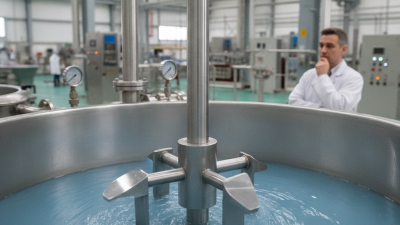
When selecting a dosing tank with an agitator, understanding the type of agitator is crucial. Different agitator designs affect the homogeneity of mixtures. High-shear agitators, for example, are optimal for dissolving solids into liquids. They create strong turbulence, which leads to faster and more uniform mixing. A study by the American Institute of Chemical Engineers indicates that effective agitation can improve mixture consistency by over 30%.
Impellers are common in various agitator types. Their shape and size profoundly influence the flow pattern within the tank. A poorly designed impeller can lead to dead zones, where mixing is inefficient. Inadequate mixing can cause variations in concentration, significantly impacting product quality. According to the Journal of Chemical Engineering, maintaining a specific energy input during mixing is critical for achieving desired results.
It's also important to consider tank geometry. A mismatched tank shape can hinder the performance of the agitator. Utilizing a conical bottom tank may enhance drainage capabilities but require a more powerful agitator to maintain uniformity. These variables add complexity to the selection process. Reflecting on these factors can prevent costly mistakes and ensure better operational outcomes.
Exploring Maintenance Requirements and Operational Efficiencies
Choosing the right dosing tank with an agitator involves careful consideration of maintenance and operational efficiency. Many facilities overlook maintenance requirements, which can lead to inefficiencies. According to a recent survey, improper maintenance can increase operational costs by up to 30%. Regular checks on agitator seals and bearings can prevent unexpected downtime.
Efficiency is key in tank operations. A well-designed agitator can enhance mixing, thus improving the quality of the final product. The right agitator speed and angle play a crucial role. For instance, a too-high speed can generate excessive energy costs. A balance must be struck between mixing efficiency and energy usage.
When selecting a dosing tank, always consider installation and maintenance needs. Plan for easy access to components. This can reduce maintenance time and labor costs. Regular training for staff on maintenance practices can also optimize operations. Investing in an efficient dosing system pays dividends in the long run. Up to 50% of industrial operators report improved performance with the right selection.
10 Essential Tips for Choosing a Dosing Tank With Agitator
This bar chart illustrates various metrics essential for evaluating dosing tanks with agitators. Key dimensions such as capacity, agitation speed, material compatibility, installation cost, maintenance frequency, energy efficiency, durability, safety features, ease of use, and customer satisfaction are crucial considerations when selecting an appropriate dosing tank.